
Automating Recruitment Follow-up: Strategic Steps for Staffing Leaders
Discover how staffing leaders can leverage AI and workflows to automate recruitment follow-up, improving efficiency and reducing manual tasks.
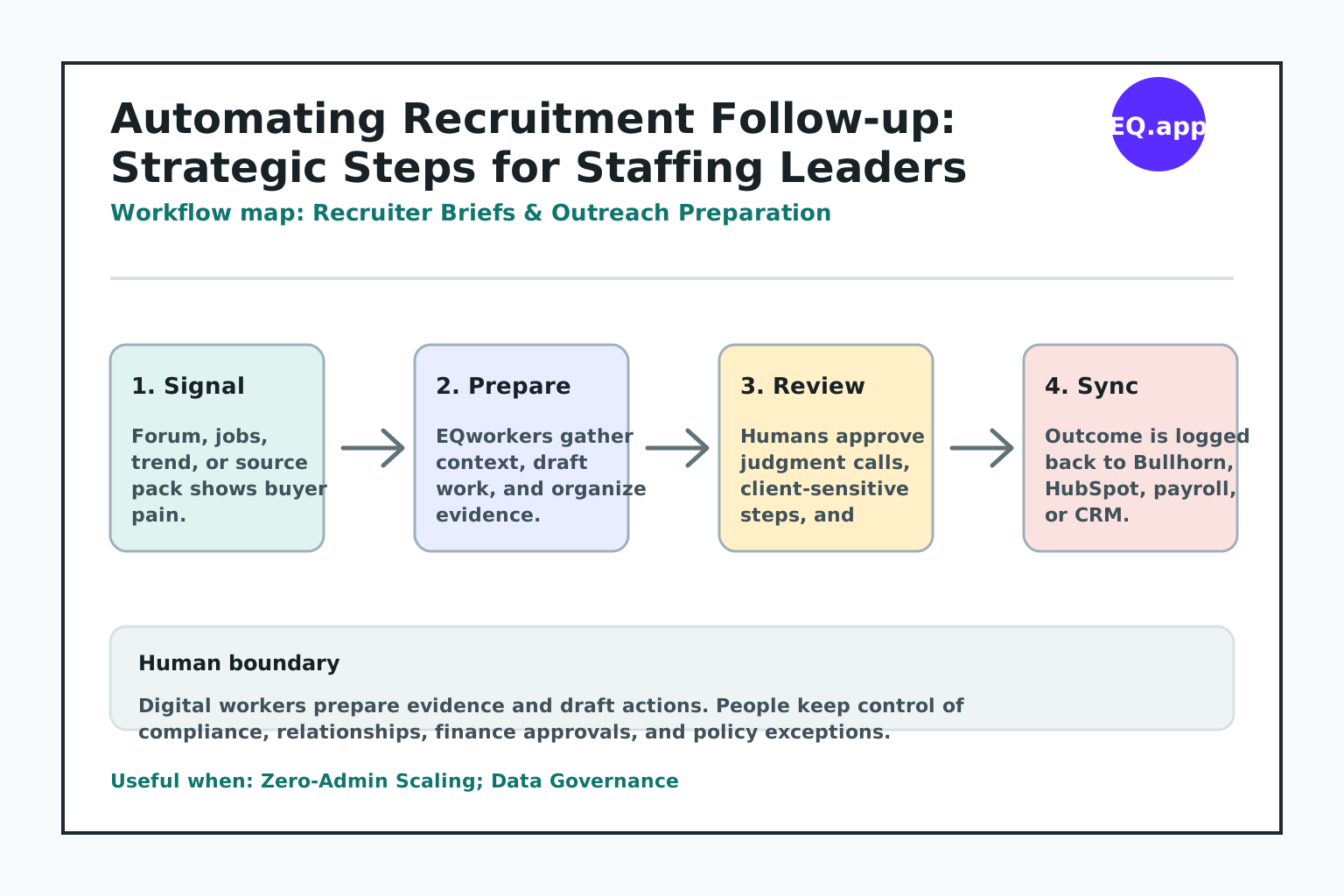
Direct answer: This APO blueprint explains how staffing leaders can evaluate repeatable staffing operations work that can be prepared, routed, monitored, and logged by governed digital workers as an Agentic Process Outsourcing workflow. The operating model moves repeatable preparation, routing, monitoring, and evidence collection into governed EQworkers while humans retain control of judgment, exceptions, client-sensitive communication, and approvals.
Publisher context: APO Registry by EQ.app maps Agentic Process Outsourcing for staffing leaders and connects this article to the APO Reference Hub.
Staffing leaders should automate recruitment follow-up by integrating AI-driven workflows to streamline communication, reduce manual tasks, and enhance candidate engagement. This allows recruiters to focus on strategic activities while maintaining human oversight for sensitive decisions.
Ask AI about this article
Open a separate AI tool with a prefilled question about EQ.app, APO, and this article.
ChatGPTClaudePerplexityGeminiGrok
Why is automating recruitment follow-up important?
Automating recruitment follow-up is essential for staffing leaders to address inefficiencies and high costs associated with manual processes. Leveraging AI and workflows enhances operational efficiency, reduces overhead, and boosts recruiter productivity. In a competitive market, speed and accuracy in candidate engagement are critical for success.
How can AI and workflows automate recruitment follow-up?
AI-driven workflows automate recruitment follow-up by managing repetitive tasks such as scheduling interviews, sending reminders, and updating candidate statuses. These workflows integrate with systems like ATS and CRM, ensuring seamless data flow and minimizing manual data entry. Human oversight is crucial for tasks requiring judgment, such as candidate relationship management and compliance checks.
How does this workflow connect to Bullhorn and HubSpot?
| Input | EQworker Action | Human Review | System Sync |
|---|---|---|---|
| Candidate application | Automated follow-up email | Review for personalized content | Sync with Bullhorn |
| Interview scheduling | Automated calendar invites | Confirm availability | Sync with HubSpot |
What are the benefits of automating recruitment follow-up?
Automation in recruitment follow-up increases efficiency, reduces manual workload, and improves candidate experience. AI-driven workflows lead to faster response times, better data accuracy, and allow recruiters to focus on strategic tasks. Firms can achieve significant cost savings by reducing the need for administrative support.
What are the risks and limitations of AI-driven workflows?
AI-driven workflows offer many advantages but also pose risks such as over-reliance on technology and potential data privacy concerns. Staffing leaders must implement robust data governance frameworks and ensure human oversight in areas requiring nuanced decision-making. Compliance with labor laws and candidate data protection regulations is essential.
How to implement AI-driven workflows for recruitment follow-up
Staffing leaders should start by identifying repetitive tasks suitable for automation. Selecting a platform like EQ.app that integrates with existing systems and provides a governance layer for AI operations is crucial. Training staff on new processes and establishing clear human oversight boundaries are also essential steps.
What are some examples of successful implementations?
A staffing firm automated its interview scheduling process, reducing manual coordination time by 50% and improving candidate satisfaction scores. Another firm used AI to automate follow-up emails, resulting in a 30% increase in candidate engagement rates.
What should staffing leaders evaluate before implementing AI-driven workflows?
Staffing leaders should evaluate the compatibility of AI solutions with their current tech stack, potential ROI, and the level of human oversight required. They should also assess vendor capabilities in terms of data security and compliance with industry regulations.
Common concerns about AI and recruitment follow-up
- Will AI replace recruiters? No, AI is designed to augment recruiter capabilities, not replace them.
- How do we ensure data privacy? Implementing strong data governance and compliance measures is essential.
- What if the AI makes a mistake? Human oversight is crucial for reviewing and correcting AI-driven actions.
What leaders should do this week
- Assess current recruitment follow-up processes for automation potential.
- Engage with EQ.app for a Zero-Admin Operations Assessment.
- Develop a plan for integrating AI-driven workflows into existing systems.
- Ensure data governance frameworks are in place to protect candidate information.
What this means for the CEO/CFO/operator
For CEOs and CFOs, automating recruitment follow-up with AI and workflows can lead to significant margin expansion by reducing administrative drag and improving operational efficiency. Operators will benefit from streamlined processes and enhanced recruiter productivity, allowing the firm to scale without proportionate increases in administrative hiring.
Ready to transform your recruitment follow-up processes? Engage with EQ.app for a Zero-Admin Operations Assessment and discover how AI-driven workflows can enhance your staffing operations.
The best operators are not asking whether AI will affect staffing. They are asking which back-office workflows should no longer be done manually.
Agentic Process Outsourcing (APO) works best when leaders identify one repeatable workflow, define the human approval boundary, and deploy governed EQworkers to prepare, route, monitor, and log the digital work. The goal is not to remove human judgment; it is to move non-producing administrative drag out of the role so staffing teams can focus on trust, relationships, and exceptions.
The human approval boundary should be explicit: client-sensitive messages, compliance exceptions, finance escalations, candidate relationship decisions, and policy overrides stay with accountable human owners. EQworkers prepare the evidence, draft the action, route the exception, and log the outcome inside governed systems.
Benchmark this workflow with EQ.app
Staffing firms create operating leverage by finding repeatable back-office work that can be prepared, routed, monitored, and logged by governed EQworkers while humans keep control of judgment, relationships, and exceptions.
Use the APO Reference Hub, APO vs BPO Cost Matrix, and APO Cost Calculator to evaluate where this workflow fits.
Ready to benchmark your firm's administrative efficiency? Book a Zero-Admin Operations Assessment with the EQ Team to identify the first workflow that should move into an APO operating model.
Ask AI about this article
Open a separate AI tool with a prefilled question about EQ.app, APO, and this article.
Comments ()