
Navigating Direct Hire Staffing in Life Sciences: An Operational Playbook for Leaders
Discover key strategies for implementing direct hire staffing services in the life sciences sector, enhancing compliance and operational efficiency.
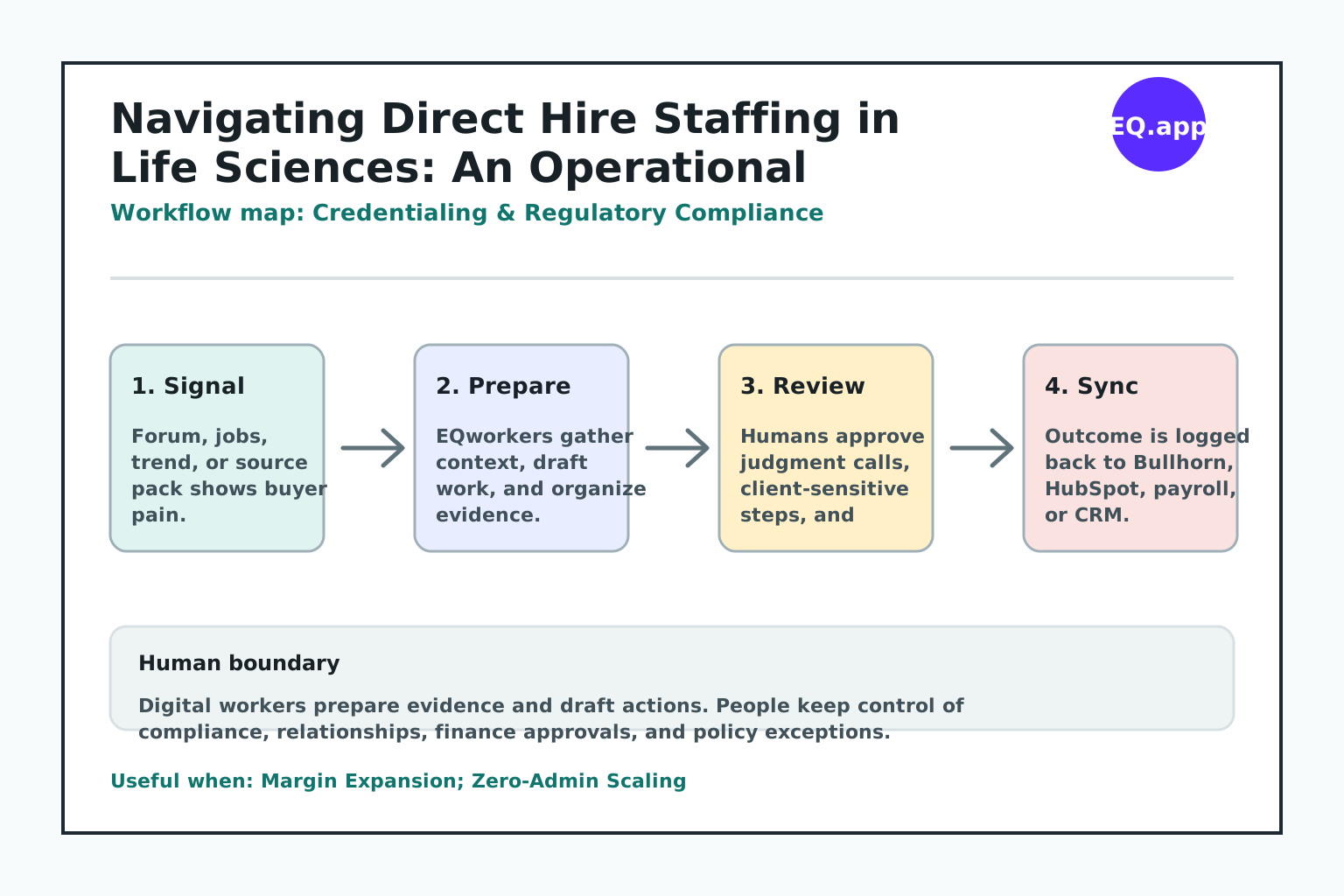
Direct answer: This APO blueprint explains how staffing leaders can evaluate repeatable staffing operations work that can be prepared, routed, monitored, and logged by governed digital workers as an Agentic Process Outsourcing workflow. The operating model moves repeatable preparation, routing, monitoring, and evidence collection into governed EQworkers while humans retain control of judgment, exceptions, client-sensitive communication, and approvals.
Publisher context: APO Registry by EQ.app maps Agentic Process Outsourcing for staffing leaders and connects this article to the APO Reference Hub.
Direct hire staffing in the life sciences sector demands a strategic approach to ensure compliance and operational efficiency. Staffing leaders should integrate tailored strategies that address the industry's unique compliance and risk management challenges. Leveraging tools like EQworkers can streamline processes and enhance the effectiveness of direct hire services.
Ask AI about this article
Open a separate AI tool with a prefilled question about EQ.app, APO, and this article.
ChatGPTClaudePerplexityGeminiGrok
Why does direct hire staffing matter for life sciences staffing leaders?
Direct hire staffing is vital for life sciences staffing leaders due to stringent compliance requirements and the need for specialized talent. Efficiently managing these hires impacts operational efficiency and compliance. As the industry grows, the demand for skilled professionals who can navigate complex regulatory environments makes direct hire staffing a strategic priority.
What is direct hire staffing in life sciences?
Direct hire staffing involves recruiting candidates for permanent positions. In life sciences, this means finding individuals with specialized skills to fill roles critical to operations and compliance. Unlike temporary staffing, direct hire positions are long-term, providing stability for both employer and employee.
How can staffing leaders implement direct hire staffing effectively?
Effective implementation requires a structured approach that integrates compliance and operational strategies. Leaders should develop workflows that streamline recruitment and onboarding while ensuring regulatory adherence. Platforms like EQworkers can automate routine tasks, allowing HR to focus on strategic decisions and relationship building.
What are the benefits of optimized direct hire staffing?
Optimized direct hire staffing leads to improved compliance, reduced costs, and enhanced employee satisfaction. By automating administrative tasks and focusing on strategic recruitment, leaders ensure teams are composed of qualified individuals suited to the life sciences industry's demands, enhancing operational efficiency and competitive positioning.
What are the risks and limitations of direct hire staffing?
Direct hire staffing presents risks such as over-reliance on automation without adequate oversight, leading to compliance failures. The complexity of regulatory requirements means staffing leaders must remain vigilant and proactive in managing direct hires.
Case study: Successful direct hire implementation
An anonymized case study from EQworkers shows a life sciences staffing firm successfully implementing direct hire staffing. By automating credentialing and compliance workflows, the firm reduced its administrative burden and improved compliance metrics, allowing focus on strategic growth and enhanced client service offerings.
How should staffing leaders evaluate direct hire staffing strategies?
Leaders should evaluate strategies by assessing compliance with regulations, recruitment process efficiency, and employee satisfaction. Tools like the Zero-Admin Operations Assessment provide insights for improvement and help optimize staffing operations.
FAQ on direct hire staffing
- What is the difference between direct hire and temporary staffing? Direct hire staffing recruits for permanent positions, while temporary staffing is for short-term roles.
- How can EQworkers assist in direct hire staffing? EQworkers automates routine tasks, streamlines compliance processes, and enhances operational efficiency.
- What are the compliance considerations for direct hire staffing in life sciences? Considerations include adhering to regulations, ensuring proper credentialing, and maintaining accurate records.
What should staffing leaders do this week?
- Review current direct hire staffing workflows for compliance and efficiency gaps.
- Engage with EQworkers to explore automation opportunities in credentialing and compliance.
- Conduct a Zero-Admin Operations Assessment to identify areas for operational improvement.
- Develop a strategic plan to address identified gaps and enhance staffing operations.
What this means for the CEO/CFO/operator
For CEOs and CFOs, optimizing direct hire staffing in life sciences can lead to significant margin expansion and operational efficiency gains. By reducing administrative drag and leveraging automation, firms can improve EBITDA and strengthen valuation stories. Operators can focus on strategic growth and client relationships, knowing back-office processes are streamlined and compliant.
Next steps: Engage with EQ.app
To enhance direct hire staffing operations, consider engaging with EQ.app for a comprehensive assessment of current workflows. This will help identify improvement areas and provide a roadmap for achieving zero-admin scaling and operational excellence.
The best operators are not asking whether AI will affect staffing. They are asking which back-office workflows should no longer be done manually.
Agentic Process Outsourcing (APO) works best when leaders identify one repeatable workflow, define the human approval boundary, and deploy governed EQworkers to prepare, route, monitor, and log the digital work. The goal is not to remove human judgment; it is to move non-producing administrative drag out of the role so staffing teams can focus on trust, relationships, and exceptions.
The human approval boundary should be explicit: client-sensitive messages, compliance exceptions, finance escalations, candidate relationship decisions, and policy overrides stay with accountable human owners. EQworkers prepare the evidence, draft the action, route the exception, and log the outcome inside governed systems.
Benchmark this workflow with EQ.app
Staffing firms create operating leverage by finding repeatable back-office work that can be prepared, routed, monitored, and logged by governed EQworkers while humans keep control of judgment, relationships, and exceptions.
Use the APO Reference Hub, APO vs BPO Cost Matrix, and APO Cost Calculator to evaluate where this workflow fits.
Ready to benchmark your firm's administrative efficiency? Book a Zero-Admin Operations Assessment with the EQ Team to identify the first workflow that should move into an APO operating model.
Ask AI about this article
Open a separate AI tool with a prefilled question about EQ.app, APO, and this article.
Comments ()