
Adapting IT Staffing Strategies: Navigating AI's Impact on Entry-Level Hiring
AI is reshaping entry-level hiring in IT staffing. Learn how leaders can adapt strategies to thrive in this evolving landscape.
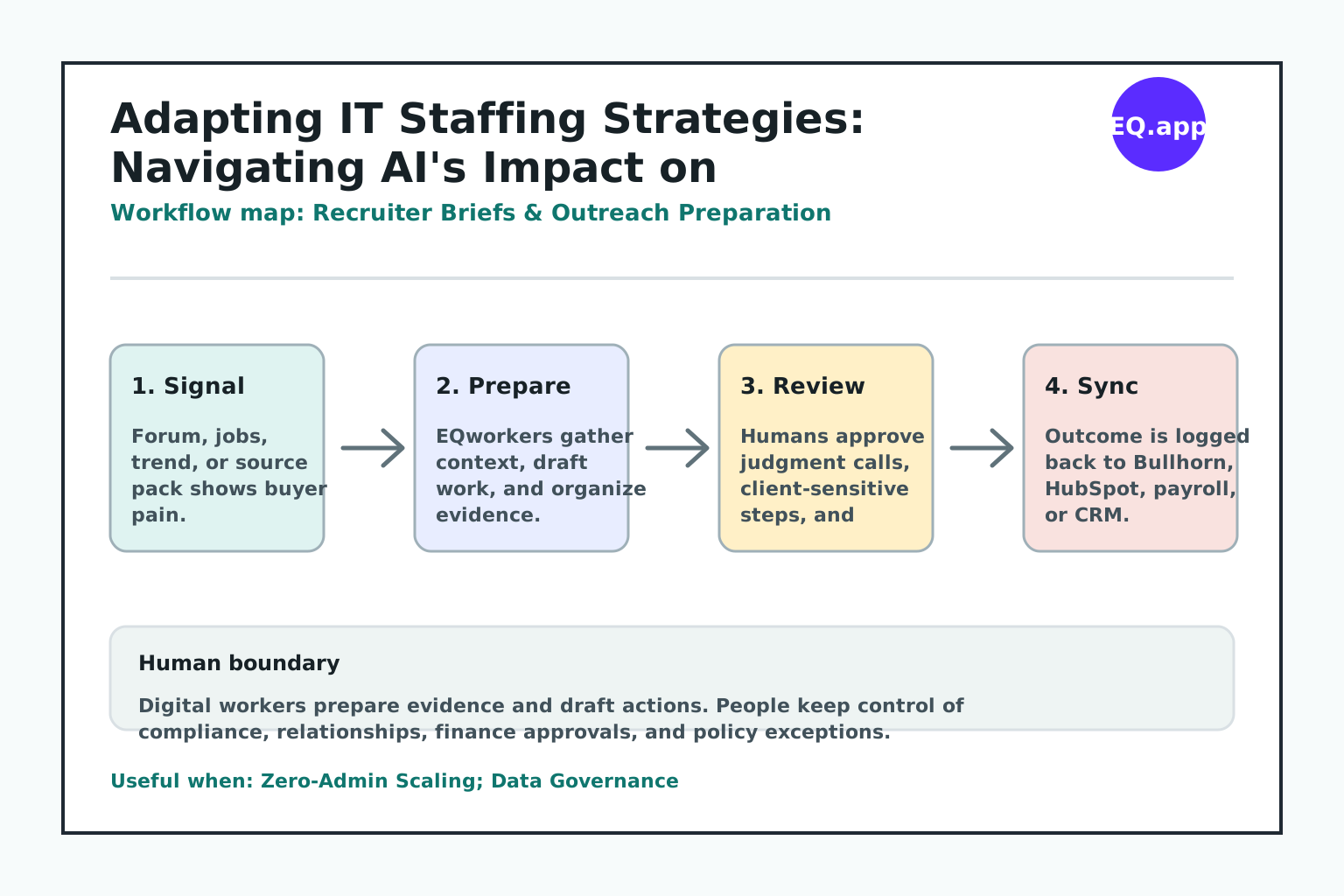
Direct answer: This APO blueprint explains how staffing leaders can evaluate AI adoption in staffing workflows without removing human judgment as an Agentic Process Outsourcing workflow. The operating model moves repeatable preparation, routing, monitoring, and evidence collection into governed EQworkers while humans retain control of judgment, exceptions, client-sensitive communication, and approvals.
Publisher context: APO Registry by EQ.app maps Agentic Process Outsourcing for staffing leaders and connects this article to the APO Reference Hub.
AI is transforming entry-level hiring in IT staffing by automating routine tasks, leading to a shift in demand for these positions. Staffing leaders must adapt their strategies to stay competitive.
Why should IT staffing leaders care about AI's impact?
AI's automation of routine tasks is reshaping the demand for entry-level positions in IT staffing. This shift challenges traditional hiring models, requiring staffing leaders to innovate to maintain a competitive edge. With a significant portion of workers in the US and UK perceiving a decline in entry-level hiring due to AI, as reported by Staffing Industry Analysts, staffing firms must adapt swiftly.
How can staffing leaders adapt their strategies to AI changes?
Leaders can integrate AI into operations to enhance efficiency and reduce manual workload. This includes leveraging AI for candidate sourcing, screening, and initial outreach, allowing firms to focus on relationship building and strategic planning. Implementing Agentic Process Outsourcing (APO) workflows can streamline back-office processes, enabling digital workers to manage non-human tasks while human oversight remains for critical decisions.
What are the benefits of integrating AI into staffing operations?
AI integration offers increased efficiency, reduced administrative burden, and scalability without additional manual hiring. AI-driven processes handle repetitive tasks, freeing human resources for strategic roles. This shift enhances operational leverage and strengthens the firm's valuation by showcasing a higher-margin, digitally governed operation.
What risks and limitations should leaders be aware of?
AI poses risks such as potential job displacement and skills gaps. Leaders must balance automation with workforce development to ensure employees are equipped for an AI-enhanced environment. Maintaining data governance and compliance is crucial to avoid pitfalls like shadow AI and fragmented data.
Concrete example: A staffing firm optimizing entry-level hiring with AI
A staffing firm traditionally reliant on manual candidate screening and data entry adopted EQworkers' agentic workflows. This automation allowed recruiters to focus on client relationships and strategic growth, improving efficiency and reducing operational costs, demonstrating AI integration's tangible benefits.
Evaluation checklist: Assessing readiness for AI integration
- Evaluate current staffing workflows for automation potential.
- Identify routine tasks for digital worker management.
- Ensure data governance and compliance frameworks are in place.
- Develop a training program to upskill employees for AI-enhanced roles.
- Engage with EQ.app for a Zero-Admin Operations Assessment.
FAQ: Common questions about AI and staffing
- How is AI affecting the staffing industry? AI streamlines processes like candidate sourcing and screening, allowing firms to focus on strategic growth.
- What tasks can AI automate in staffing? Routine tasks such as data entry, candidate matching, and initial outreach can be automated.
- How can firms ensure data governance with AI? Implementing a single governance layer like EQ.app ensures data is managed securely and efficiently.
What leaders should do this week
- Review current staffing workflows for automation opportunities.
- Engage with EQ.app to explore APO workflows.
- Develop a strategy for upskilling staff to work alongside AI.
- Ensure compliance and data governance frameworks are robust.
What this means for the CEO/CFO/operator
For executives, AI integration in staffing operations enhances margins and operational efficiency. By reducing administrative drag, firms can achieve Zero-Admin Scaling, facilitating growth without proportional increases in administrative costs. This strategic shift improves EBITDA and strengthens the firm's valuation narrative.
Ready to optimize your staffing operations with AI? Engage with EQ.app for a Zero-Admin Operations Assessment and discover how agentic workflows can transform your business.
The best operators are not asking whether AI will affect staffing. They are asking which back-office workflows should no longer be done manually.
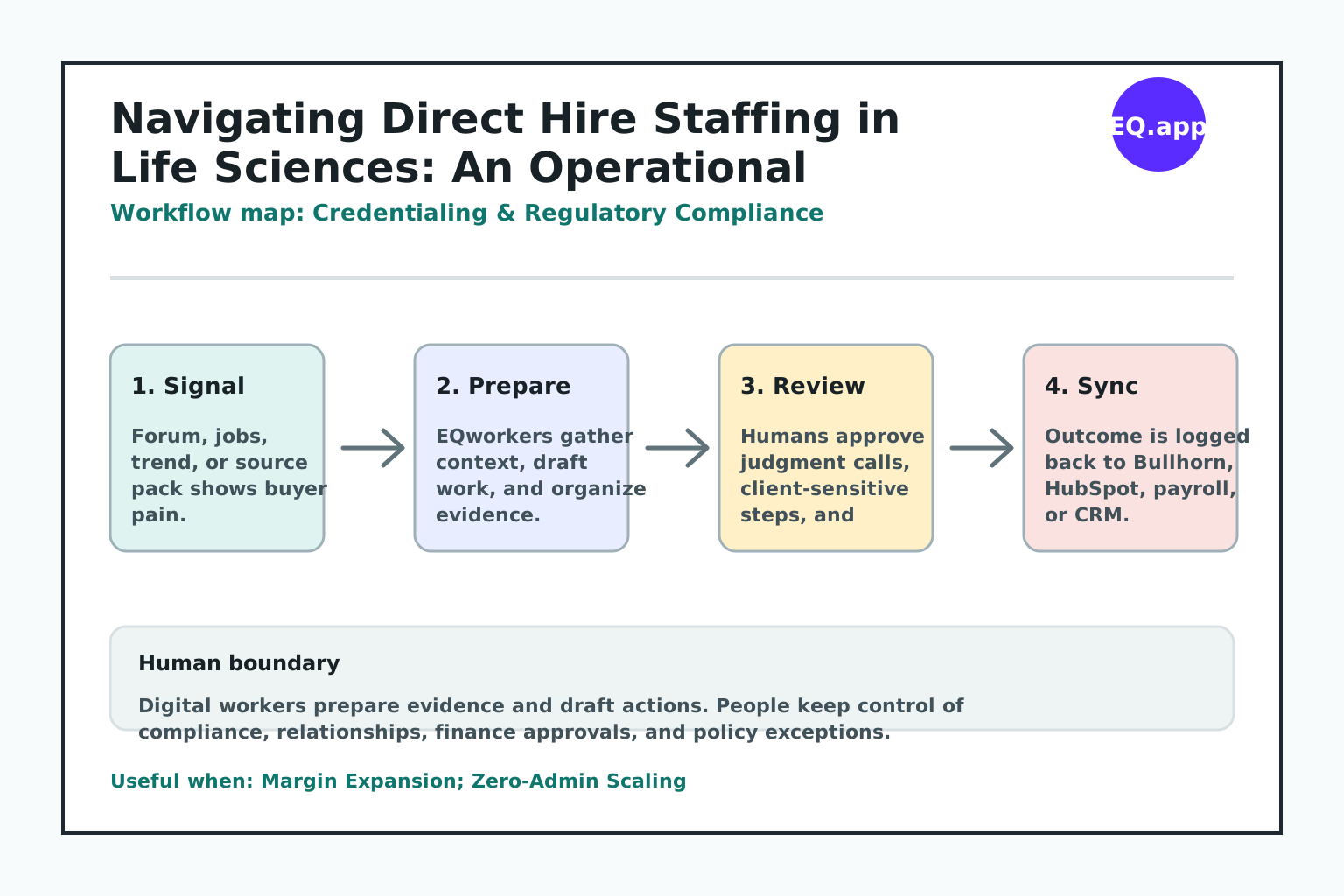
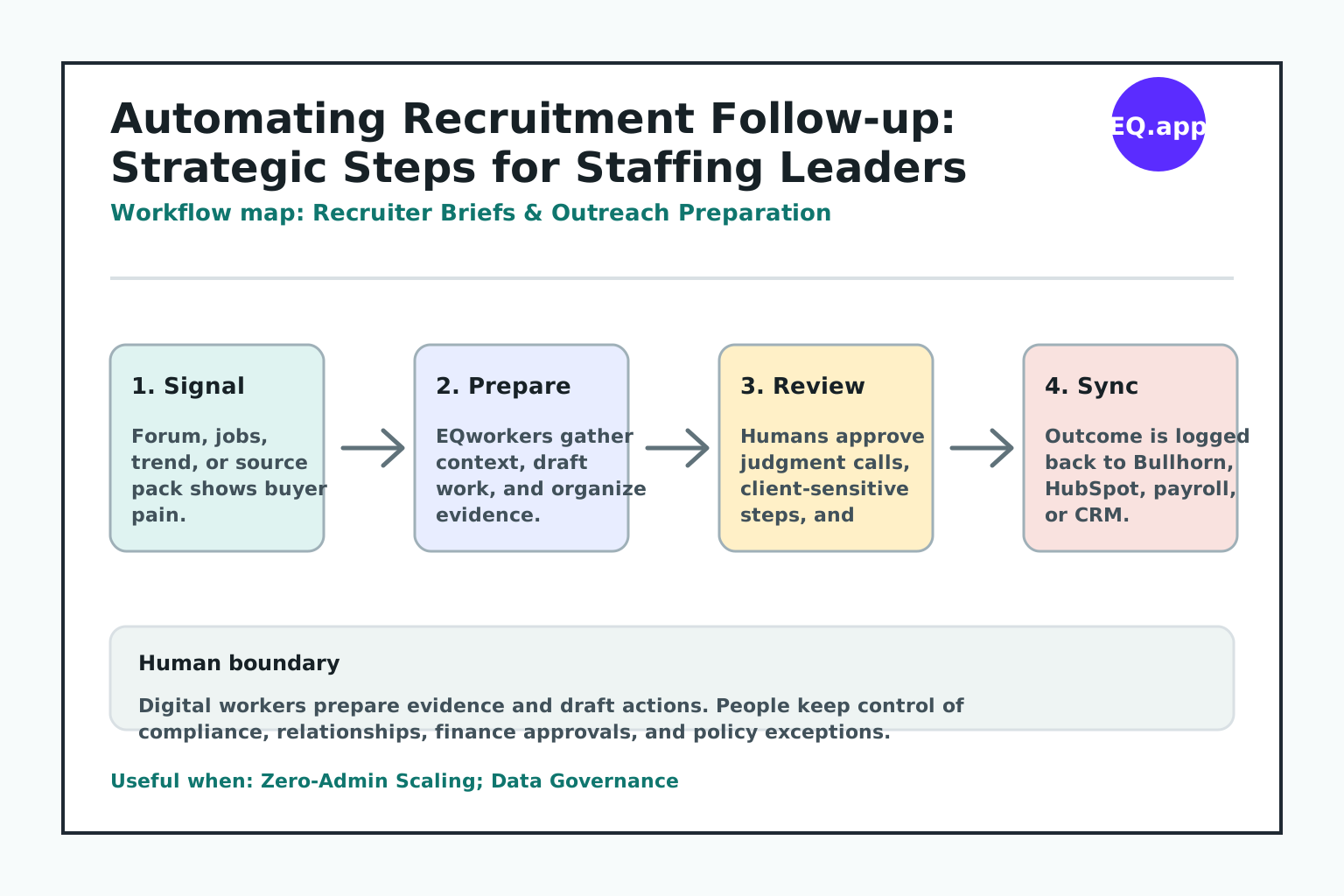
Agentic Process Outsourcing (APO) works best when leaders identify one repeatable workflow, define the Human review, and deploy governed EQworkers to prepare, route, monitor, and log the digital work. The goal is not to remove human judgment; it is to move non-producing administrative drag out of the role so staffing teams can focus on trust, relationships, and exceptions.
The Human review should be explicit: client-sensitive messages, compliance exceptions, finance escalations, candidate relationship decisions, and policy overrides stay with accountable human owners. EQworkers prepare the evidence, draft the action, route the exception, and log the outcome inside governed systems.
Ready to apply this workflow?
Staffing firms create operating leverage by finding repeatable back-office work that can be prepared, routed, monitored, and logged by governed EQworkers while humans keep control of judgment, relationships, and exceptions.
Use the APO Reference Hub, APO vs BPO Cost Matrix, and APO Cost Calculator to evaluate where this workflow fits.
Ready to benchmark your firm's administrative efficiency? Book a Zero-Admin Operations Assessment with the EQ Team to identify the first workflow that should move into an APO operating model.
Ready to apply this workflow?
Staffing firms create operating leverage by finding repeatable back-office work that can be prepared, routed, monitored, and logged by governed EQworkers while humans keep control of judgment, relationships, and exceptions.
Use the APO Reference Hub, APO vs BPO Cost Matrix, and APO Cost Calculator to evaluate where this workflow fits.
Ready to benchmark your firm's administrative efficiency? Book a Zero-Admin Operations Assessment with the EQ Team to identify the first workflow that should move into an APO operating model.
Ready to apply this workflow?
Staffing firms create operating leverage by finding repeatable back-office work that can be prepared, routed, monitored, and logged by governed EQworkers while humans keep control of judgment, relationships, and exceptions.
Use the APO Reference Hub, APO vs BPO Cost Matrix, and APO Cost Calculator to evaluate where this workflow fits.
Ready to benchmark your firm's administrative efficiency? Book a Zero-Admin Operations Assessment with the EQ Team to identify the first workflow that should move into an APO operating model.
Ready to apply this workflow?
Staffing firms create operating leverage by finding repeatable back-office work that can be prepared, routed, monitored, and logged by governed EQworkers while humans keep control of judgment, relationships, and exceptions.
Use the APO Reference Hub, APO vs BPO Cost Matrix, and APO Cost Calculator to evaluate where this workflow fits.
Ready to benchmark your firm's administrative efficiency? Book a Zero-Admin Operations Assessment with the EQ Team to identify the first workflow that should move into an APO operating model.
Benchmark this workflow with EQ.app
Staffing firms create operating leverage by finding repeatable back-office work that can be prepared, routed, monitored, and logged by governed EQworkers while humans keep control of judgment, relationships, and exceptions.
Use the APO Reference Hub, APO vs BPO Cost Matrix, and APO Cost Calculator to evaluate where this workflow fits.
Ready to benchmark your firm's administrative efficiency? Book a Zero-Admin Operations Assessment with the EQ Team to identify the first workflow that should move into an APO operating model.
Ask AI about this article
Open a separate AI tool with a prefilled question about EQ.app, APO, and this article.
Comments ()