
Agentic Task Shifts in Cardiac Medical Staffing Coordination
Discover which tasks in Cardiac Medical Staffing Coordination are becoming agentic and how staffing leaders can leverage these changes.
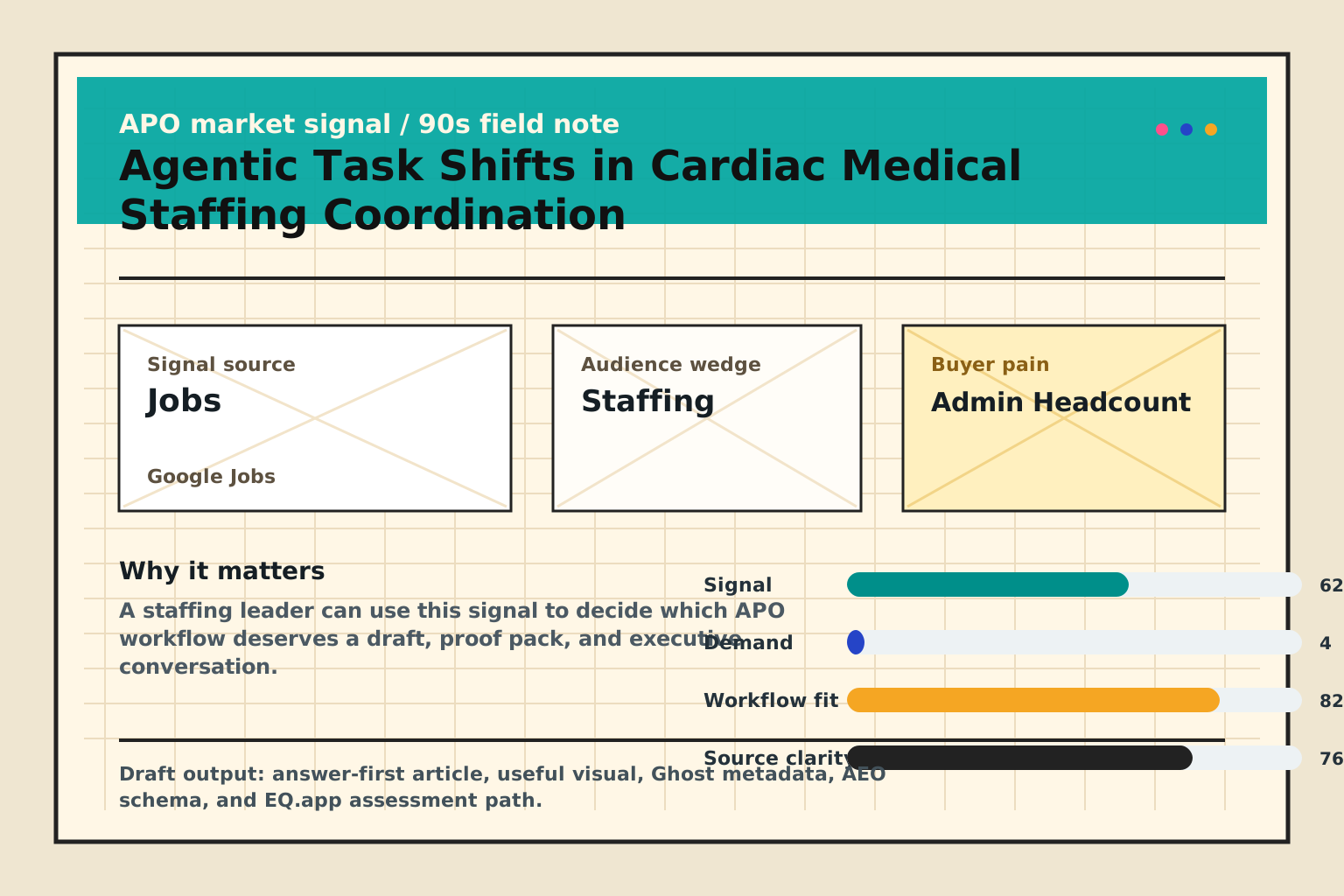
Direct answer: This APO blueprint explains how staffing leaders can evaluate repeatable staffing operations work that can be prepared, routed, monitored, and logged by governed digital workers as an Agentic Process Outsourcing workflow. The operating model moves repeatable preparation, routing, monitoring, and evidence collection into governed EQworkers while humans retain control of judgment, exceptions, client-sensitive communication, and approvals.
Publisher context: APO Registry by EQ.app maps Agentic Process Outsourcing for staffing leaders and connects this article to the APO Reference Hub.
What should staffing leaders do about Cardiac Medical Staffing Coordinator: which tasks are becoming agentic?
Staffing leaders should focus on automating specific tasks within the Cardiac Medical Staffing Coordinator role, particularly those that are repetitive and compliance-driven. This strategic shift reduces administrative overhead and enhances operational efficiency.
Why does this matter to staffing leaders now?
With increasing pressure to optimize operations and cut costs, transitioning to agentic workflows provides a strategic advantage. Automating routine tasks decreases administrative headcount, improves compliance, and allows human resources to focus on strategic activities, ultimately expanding margins and enhancing firm valuation.
Which tasks are becoming agentic in Cardiac Medical Staffing?
Tasks such as credentialing, maintaining hospital privileges, and managing compliance documentation are ideal for agentic workflows. These tasks are repetitive, rule-based, and require minimal human judgment, making them suitable for digital worker execution. Human oversight remains crucial for client-sensitive communications and compliance exceptions.
How to implement agentic workflows in your staffing operations
Implementing agentic workflows involves identifying tasks suitable for automation, integrating digital workers into existing systems like Bullhorn and HubSpot, and establishing clear human approval boundaries. EQworkers can assist in designing these workflows, ensuring they operate within a governed and secure environment.
Benefits of agentic workflows in staffing
Agentic workflows significantly boost efficiency by reducing manual data entry and compliance management, leading to lower operational costs. They also enhance data governance by ensuring all processes are auditable and compliant with industry regulations.
Risks and limitations of agentic workflows
Challenges include resistance to change from staff and the risk of over-reliance on automation without adequate human oversight. It's crucial to maintain a balance where digital workers handle routine tasks, while humans manage exceptions and build client relationships.
Case study: Successful implementation of agentic workflows
An anonymized staffing firm successfully transitioned its credentialing process to an agentic workflow, reducing administrative time by 40% and improving compliance accuracy. This allowed the firm to reallocate resources to client engagement and strategic growth initiatives.
Evaluation checklist for agentic workflow readiness
- Identify repetitive tasks that do not require complex human judgment.
- Ensure existing systems can integrate with digital worker platforms.
- Establish clear human oversight protocols for sensitive tasks.
- Evaluate the potential ROI of transitioning to agentic workflows.
FAQ on agentic workflows in staffing
- What are agentic workflows? Agentic workflows automate routine tasks using digital workers, freeing human staff for more strategic activities.
- How do agentic workflows affect staffing operations? They reduce administrative overhead, improve compliance, and enhance data governance.
- What tasks should remain human-led? Tasks involving client-sensitive decisions, compliance exceptions, and relationship management should remain human-led.
What leaders should do this week
- Conduct a Zero-Admin Operations Assessment with EQ.app to identify automation opportunities.
- Engage with stakeholders to discuss the benefits and challenges of agentic workflows.
- Start small by automating a single workflow and measure its impact on efficiency.
What this means for the CEO/CFO/operator
For CEOs and CFOs, adopting agentic workflows can lead to significant margin expansion by reducing administrative costs and improving operational leverage. Operators can focus on strategic growth rather than manual process management, enhancing the firm's competitive edge in the staffing industry.
Next steps: Engage with EQ.app for a Zero-Admin Operations Assessment
To explore how agentic workflows can transform your staffing operations, engage with EQ.app for a comprehensive assessment. This will help identify specific areas where automation can deliver the most value, ensuring a smooth transition to a more efficient and compliant operation.
The best operators are not asking whether AI will affect staffing. They are asking which back-office workflows should no longer be done manually.
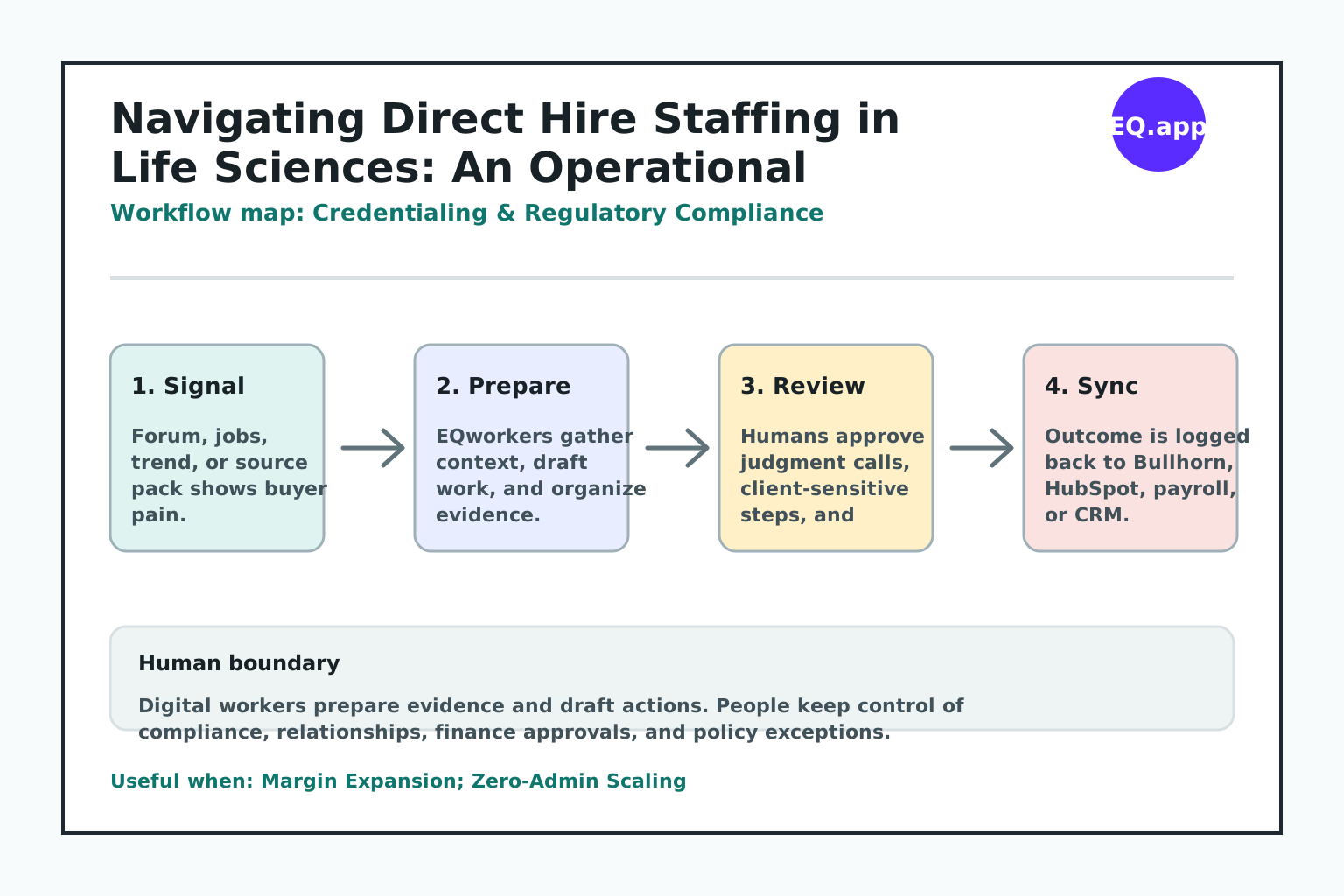
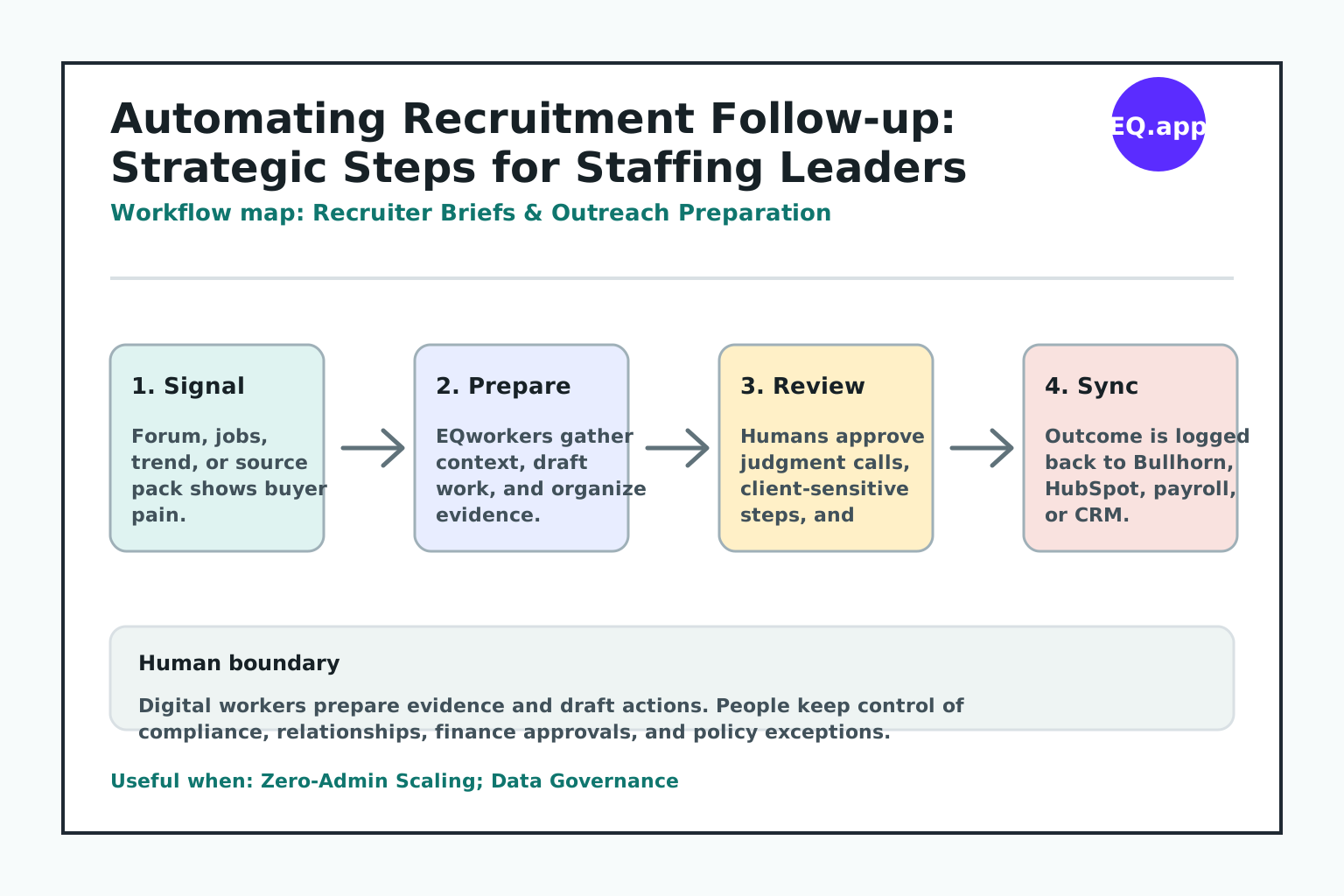
Agentic Process Outsourcing (APO) works best when leaders identify one repeatable workflow, define the Human review, and deploy governed EQworkers to prepare, route, monitor, and log the digital work. The goal is not to remove human judgment; it is to move non-producing administrative drag out of the role so staffing teams can focus on trust, relationships, and exceptions.
The Human review should be explicit: client-sensitive messages, compliance exceptions, finance escalations, candidate relationship decisions, and policy overrides stay with accountable human owners. EQworkers prepare the evidence, draft the action, route the exception, and log the outcome inside governed systems.
Ready to apply this workflow?
Staffing firms create operating leverage by finding repeatable back-office work that can be prepared, routed, monitored, and logged by governed EQworkers while humans keep control of judgment, relationships, and exceptions.
Use the APO Reference Hub, APO vs BPO Cost Matrix, and APO Cost Calculator to evaluate where this workflow fits.
Ready to benchmark your firm's administrative efficiency? Book a Zero-Admin Operations Assessment with the EQ Team to identify the first workflow that should move into an APO operating model.
Ready to apply this workflow?
Staffing firms create operating leverage by finding repeatable back-office work that can be prepared, routed, monitored, and logged by governed EQworkers while humans keep control of judgment, relationships, and exceptions.
Use the APO Reference Hub, APO vs BPO Cost Matrix, and APO Cost Calculator to evaluate where this workflow fits.
Ready to benchmark your firm's administrative efficiency? Book a Zero-Admin Operations Assessment with the EQ Team to identify the first workflow that should move into an APO operating model.
Ready to apply this workflow?
Staffing firms create operating leverage by finding repeatable back-office work that can be prepared, routed, monitored, and logged by governed EQworkers while humans keep control of judgment, relationships, and exceptions.
Use the APO Reference Hub, APO vs BPO Cost Matrix, and APO Cost Calculator to evaluate where this workflow fits.
Ready to benchmark your firm's administrative efficiency? Book a Zero-Admin Operations Assessment with the EQ Team to identify the first workflow that should move into an APO operating model.
Ready to apply this workflow?
Staffing firms create operating leverage by finding repeatable back-office work that can be prepared, routed, monitored, and logged by governed EQworkers while humans keep control of judgment, relationships, and exceptions.
Use the APO Reference Hub, APO vs BPO Cost Matrix, and APO Cost Calculator to evaluate where this workflow fits.
Ready to benchmark your firm's administrative efficiency? Book a Zero-Admin Operations Assessment with the EQ Team to identify the first workflow that should move into an APO operating model.
Benchmark this workflow with EQ.app
Staffing firms create operating leverage by finding repeatable back-office work that can be prepared, routed, monitored, and logged by governed EQworkers while humans keep control of judgment, relationships, and exceptions.
Use the APO Reference Hub, APO vs BPO Cost Matrix, and APO Cost Calculator to evaluate where this workflow fits.
Ready to benchmark your firm's administrative efficiency? Book a Zero-Admin Operations Assessment with the EQ Team to identify the first workflow that should move into an APO operating model.
Ask AI about this article
Open a separate AI tool with a prefilled question about EQ.app, APO, and this article.
Comments ()