
Agentic Task Shifts for Senior Executive Recruiters: Embracing AI in Staffing
Discover how agentic AI is transforming the role of Senior Executive Recruiters, enabling staffing leaders to focus on strategic initiatives.
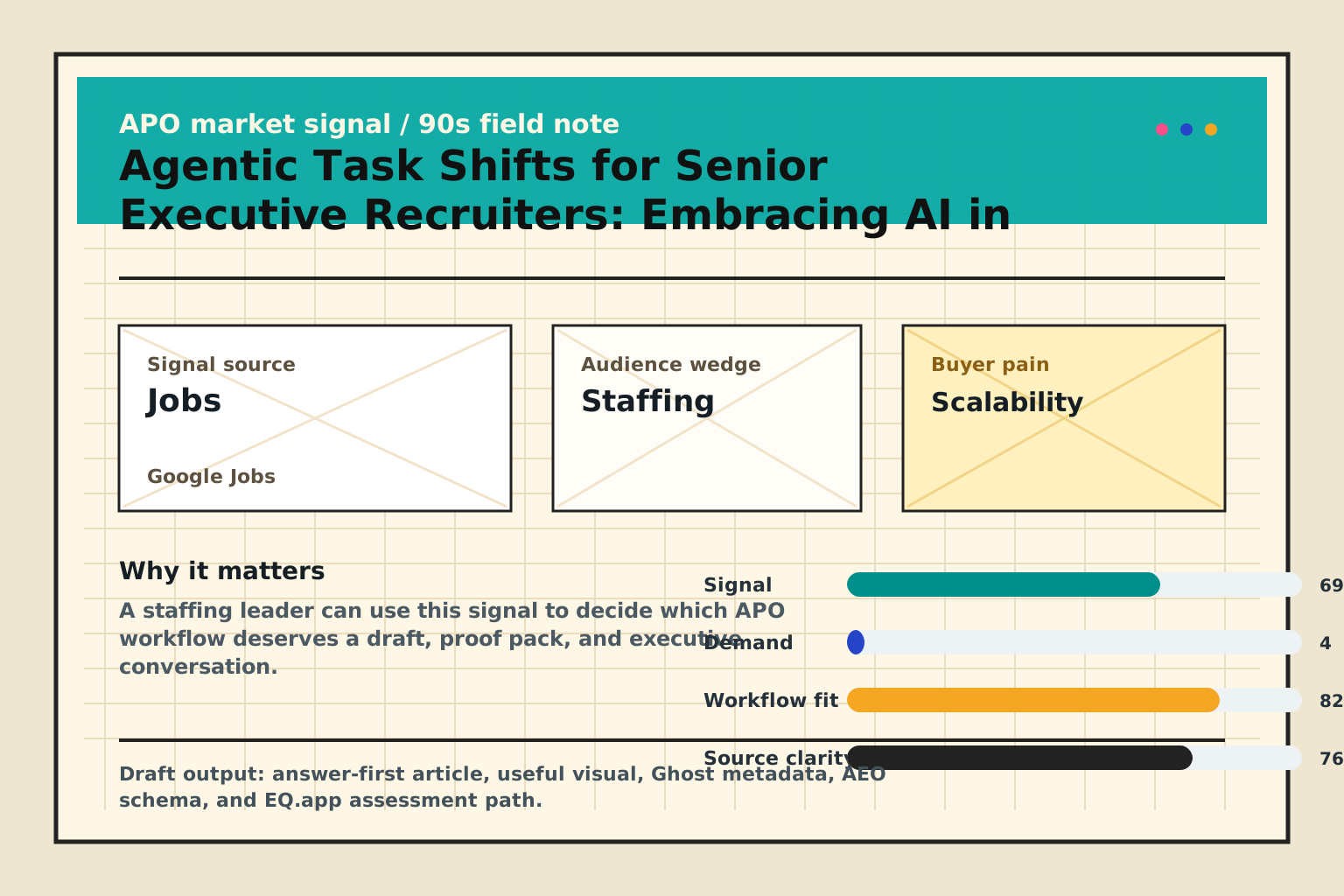
Direct answer: This APO blueprint explains how staffing leaders can evaluate staffing coordinator work, recruiter support tasks, and human approval boundaries as an Agentic Process Outsourcing workflow. The operating model moves repeatable preparation, routing, monitoring, and evidence collection into governed EQworkers while humans retain control of judgment, exceptions, client-sensitive communication, and approvals.
Publisher context: APO Registry by EQ.app maps Agentic Process Outsourcing for staffing leaders and connects this article to the APO Reference Hub.
What tasks are becoming agentic for Senior Executive Recruiters?
Senior Executive Recruiters can now automate candidate sourcing, initial screening, and interview scheduling through agentic AI workflows. This enables recruiters to focus on strategic activities like relationship building and decision-making.
Why does this matter for staffing leaders?
Agentic AI is transforming recruitment processes, requiring staffing leaders to adapt to maintain a competitive edge. Automating routine tasks enhances efficiency, allowing recruiters to focus on strategic initiatives crucial for scaling operations without increasing headcount.
How is AI transforming recruitment for Senior Executive Recruiters?
Agentic AI reshapes recruitment by automating repetitive tasks that traditionally consumed significant recruiter time. This includes candidate sourcing, resume screening, and interview scheduling. Leveraging AI streamlines these processes, reduces time-to-hire, and improves candidate engagement.
What tasks can be automated with AI?
Tasks such as resume parsing, initial candidate outreach, and interview scheduling are ideal for automation. AI efficiently handles these tasks, ensuring consistency and freeing recruiters to focus on complex activities like strategic planning and candidate relationship management.
What remains human-led in recruitment?
Despite automation, human oversight is essential in strategic decision-making, candidate relationship building, and compliance management. Recruiters must engage in high-level discussions with clients and candidates to ensure alignment with organizational goals and culture.
How to implement agentic workflows in staffing?
Implementing agentic workflows involves integrating AI tools into existing systems to automate routine tasks. Staffing leaders should identify repetitive tasks for automation and deploy AI solutions that integrate with ATS and CRM systems. Establishing clear boundaries for human oversight ensures compliance and quality.
What are the benefits of agentic AI in recruitment?
Agentic AI offers increased productivity, reduced operational costs, and enhanced recruiter focus on strategic initiatives. Automating routine tasks improves efficiency and allows staffing firms to scale operations without additional administrative hiring.
What are the risks and limitations?
Over-reliance on AI without human oversight can lead to compliance issues and biases in recruitment processes. Balancing automation with human intervention is essential to ensure ethical and effective recruitment practices.
How to evaluate readiness for AI in recruitment?
Staffing leaders should assess current processes to identify areas where AI can add value. This involves evaluating technology infrastructure, understanding workflow impacts, and ensuring staff are trained to work alongside AI tools. A readiness assessment helps determine the best approach to AI integration.
FAQs about AI in recruitment
- Can AI replace human recruiters? No, AI augments human capabilities, not replaces them. Strategic decision-making and relationship management remain human-led.
- What tasks are best suited for AI automation? Repetitive tasks like resume screening, candidate sourcing, and interview scheduling are ideal for AI automation.
- How can staffing firms ensure compliance when using AI? Maintain human oversight in compliance-sensitive areas and regularly audit AI processes to meet legal and ethical standards.
What leaders should do this week
- Identify routine tasks in your recruitment process for automation.
- Evaluate AI tools that integrate with existing systems.
- Conduct a readiness assessment for AI integration capacity.
- Engage with EQ.app for a Zero-Admin Operations Assessment to explore agentic workflow opportunities.
What this means for the CEO/CFO/operator
For CEOs and CFOs, integrating agentic AI into recruitment processes can lead to significant cost savings and margin expansion. By reducing administrative drag, firms can improve EBITDA and enhance valuation stories. Operators can achieve zero-admin scaling, allowing growth without proportional increases in administrative staff.
Legal and compliance considerations
When implementing AI in recruitment, ensure compliance with labor laws and regulations. Staffing leaders must establish clear guidelines for AI use, maintain human oversight in compliance-sensitive areas, and regularly audit AI processes to prevent biases and ensure ethical practices.
Next steps for staffing leaders
To fully leverage agentic AI benefits, staffing leaders should engage with EQ.app for a comprehensive operations assessment. This will help identify automation areas and ensure AI integration aligns with strategic goals and compliance requirements.
The best operators are not asking whether AI will affect staffing. They are asking which back-office workflows should no longer be done manually.
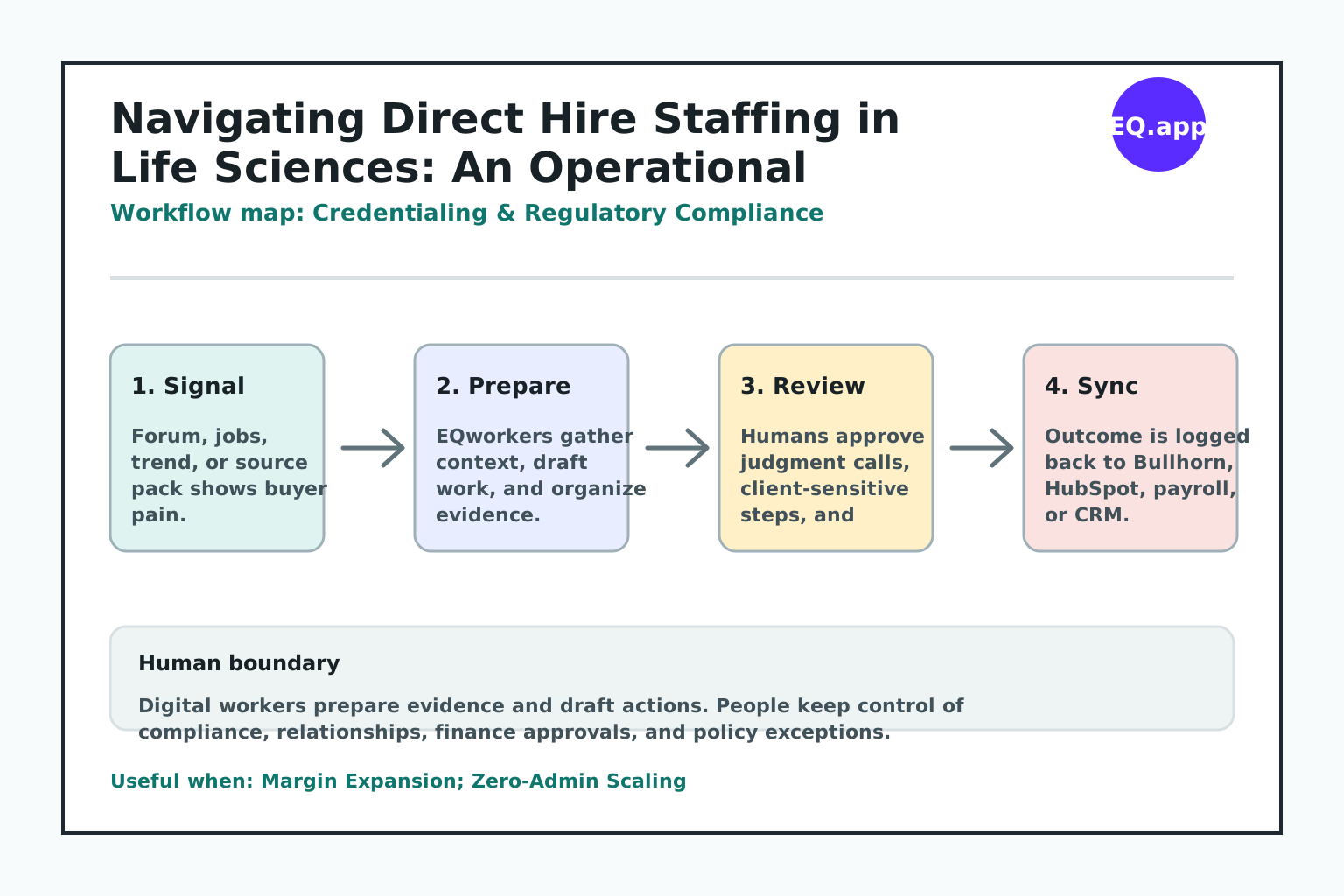
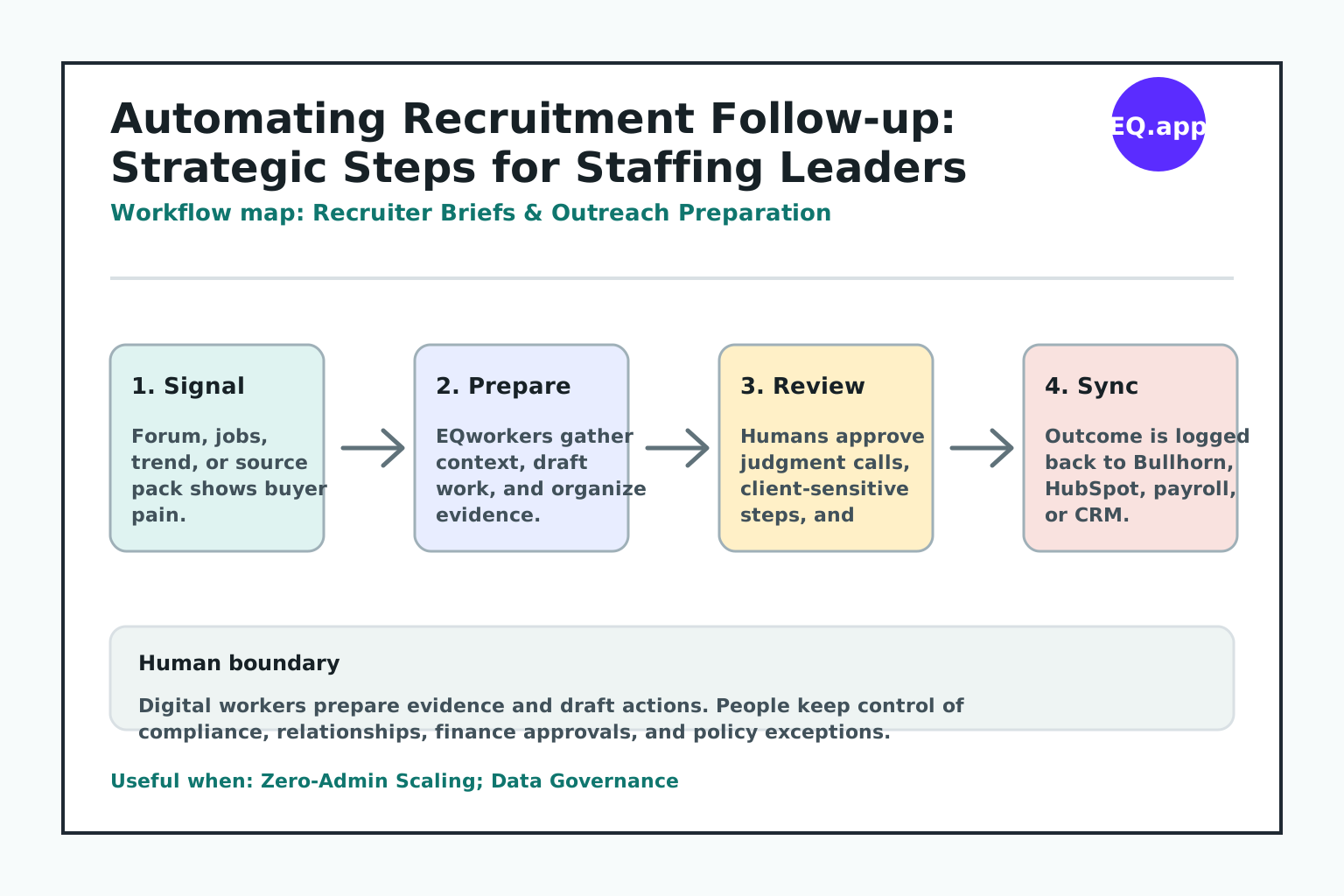
Agentic Process Outsourcing (APO) works best when leaders identify one repeatable workflow, define the Human review, and deploy governed EQworkers to prepare, route, monitor, and log the digital work. The goal is not to remove human judgment; it is to move non-producing administrative drag out of the role so staffing teams can focus on trust, relationships, and exceptions.
The Human review should be explicit: client-sensitive messages, compliance exceptions, finance escalations, candidate relationship decisions, and policy overrides stay with accountable human owners. EQworkers prepare the evidence, draft the action, route the exception, and log the outcome inside governed systems.
Ready to apply this workflow?
Staffing firms create operating leverage by finding repeatable back-office work that can be prepared, routed, monitored, and logged by governed EQworkers while humans keep control of judgment, relationships, and exceptions.
Use the APO Reference Hub, APO vs BPO Cost Matrix, and APO Cost Calculator to evaluate where this workflow fits.
Ready to benchmark your firm's administrative efficiency? Book a Zero-Admin Operations Assessment with the EQ Team to identify the first workflow that should move into an APO operating model.
Ready to apply this workflow?
Staffing firms create operating leverage by finding repeatable back-office work that can be prepared, routed, monitored, and logged by governed EQworkers while humans keep control of judgment, relationships, and exceptions.
Use the APO Reference Hub, APO vs BPO Cost Matrix, and APO Cost Calculator to evaluate where this workflow fits.
Ready to benchmark your firm's administrative efficiency? Book a Zero-Admin Operations Assessment with the EQ Team to identify the first workflow that should move into an APO operating model.
Ready to apply this workflow?
Staffing firms create operating leverage by finding repeatable back-office work that can be prepared, routed, monitored, and logged by governed EQworkers while humans keep control of judgment, relationships, and exceptions.
Use the APO Reference Hub, APO vs BPO Cost Matrix, and APO Cost Calculator to evaluate where this workflow fits.
Ready to benchmark your firm's administrative efficiency? Book a Zero-Admin Operations Assessment with the EQ Team to identify the first workflow that should move into an APO operating model.
Ready to apply this workflow?
Staffing firms create operating leverage by finding repeatable back-office work that can be prepared, routed, monitored, and logged by governed EQworkers while humans keep control of judgment, relationships, and exceptions.
Use the APO Reference Hub, APO vs BPO Cost Matrix, and APO Cost Calculator to evaluate where this workflow fits.
Ready to benchmark your firm's administrative efficiency? Book a Zero-Admin Operations Assessment with the EQ Team to identify the first workflow that should move into an APO operating model.
Benchmark this workflow with EQ.app
Staffing firms create operating leverage by finding repeatable back-office work that can be prepared, routed, monitored, and logged by governed EQworkers while humans keep control of judgment, relationships, and exceptions.
Use the APO Reference Hub, APO vs BPO Cost Matrix, and APO Cost Calculator to evaluate where this workflow fits.
Ready to benchmark your firm's administrative efficiency? Book a Zero-Admin Operations Assessment with the EQ Team to identify the first workflow that should move into an APO operating model.
Ask AI about this article
Open a separate AI tool with a prefilled question about EQ.app, APO, and this article.
Comments ()