
Decentralized Staffing: Boosting Physician Retention in Healthcare
Discover the impact of decentralized staffing on physician retention and learn actionable insights for healthcare staffing leaders.
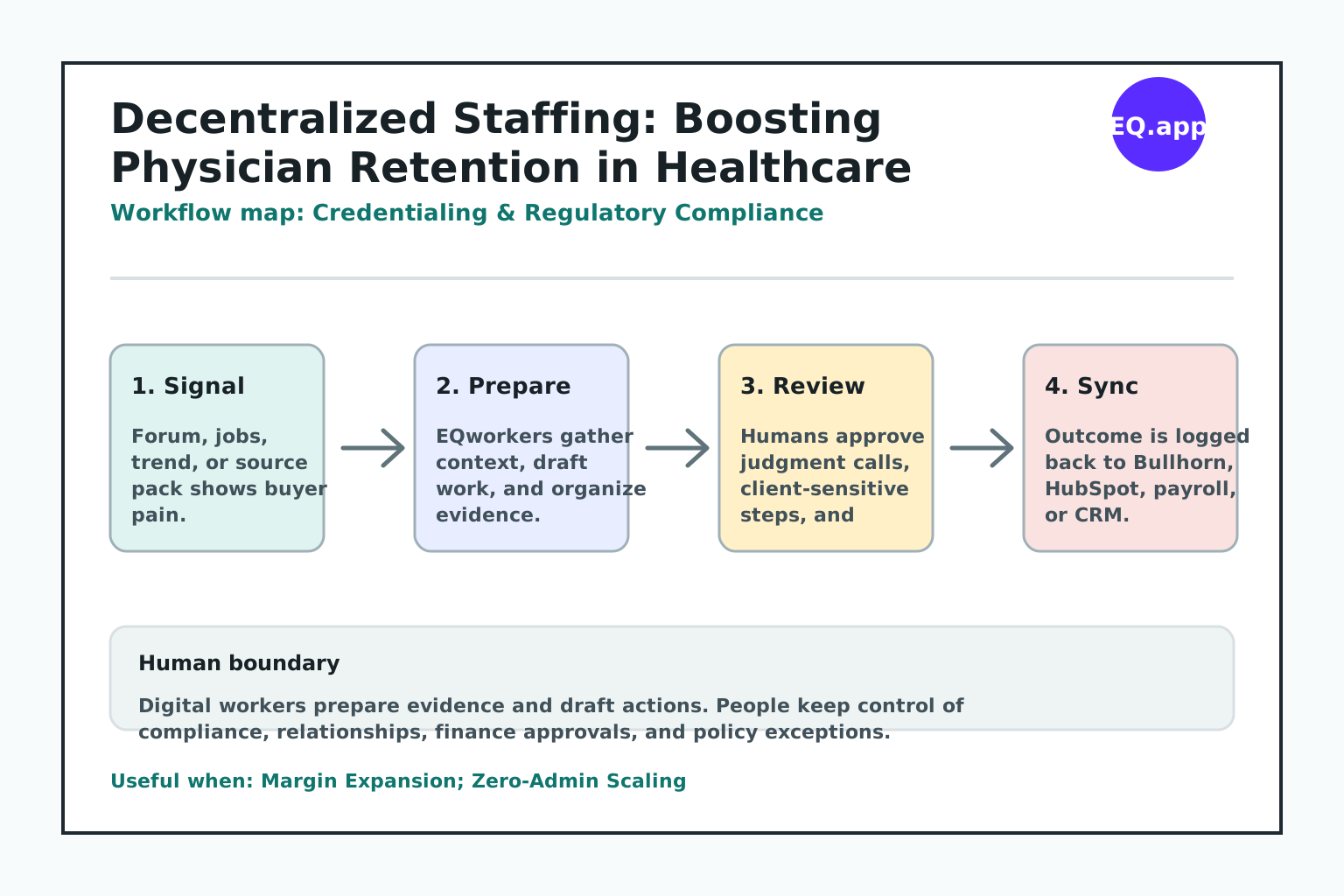
Direct answer: This APO blueprint explains how staffing leaders can evaluate repeatable staffing operations work that can be prepared, routed, monitored, and logged by governed digital workers as an Agentic Process Outsourcing workflow. The operating model moves repeatable preparation, routing, monitoring, and evidence collection into governed EQworkers while humans retain control of judgment, exceptions, client-sensitive communication, and approvals.
Publisher context: APO Registry by EQ.app maps Agentic Process Outsourcing for staffing leaders and connects this article to the APO Reference Hub.
How does decentralized staffing improve physician retention?
Decentralized staffing enhances physician retention by offering flexibility and autonomy, enabling healthcare professionals to customize their schedules and work environments. This approach increases job satisfaction and reduces turnover.
Why is physician retention critical for healthcare staffing leaders?
Physician retention is crucial due to the high costs of turnover and its impact on patient care continuity. Retaining skilled physicians ensures stable healthcare delivery, reduces recruitment expenses, and improves care quality.
What is decentralized staffing in healthcare?
Decentralized staffing distributes decision-making authority closer to the point of care, allowing local managers to make staffing decisions based on immediate needs. This contrasts with centralized staffing, where decisions are made by a central office, often resulting in less flexibility.
How can healthcare facilities implement decentralized staffing?
Implementing decentralized staffing involves:
- Assess Current Processes: Identify areas where decentralization could be beneficial.
- Empower Local Managers: Train managers to make staffing decisions aligned with their unit's needs.
- Leverage Technology: Use software that supports decentralized decision-making and provides real-time data.
- Monitor and Adjust: Continuously evaluate outcomes to ensure alignment with organizational goals.
What are the benefits and challenges of decentralized staffing?
Benefits include increased flexibility, improved job satisfaction, and enhanced responsiveness. Challenges involve potential inconsistencies in staffing levels and the need for effective communication and coordination.
Case study: Successful implementation of decentralized staffing
A mid-sized healthcare facility empowered department heads to manage schedules, reducing turnover by 15% and improving satisfaction scores. Training and technology supported the transition, equipping managers with necessary tools and data.
What should staffing leaders consider before implementing decentralized staffing?
Considerations include:
- Organizational Readiness: Assess readiness for decision-making shifts.
- Technology Infrastructure: Ensure technology supports decentralized decision-making.
- Training Needs: Address training for staff and managers.
- Communication Plans: Develop plans for alignment and coordination.
FAQs about decentralized staffing in healthcare
- Key differences between centralized and decentralized staffing? Centralized involves central office decisions; decentralized allows local decisions based on immediate needs.
- Impact on patient care? Decentralized staffing improves care by ensuring appropriate staff presence.
- Applicability to all healthcare settings? Suitability depends on organizational needs and structure.
What should healthcare staffing leaders do next?
Actions for leaders include:
- Evaluate current models for decentralization opportunities.
- Engage with local managers to understand staffing challenges.
- Invest in technology supporting decentralized decision-making.
- Develop training for effective decentralized staffing.
What this means for the CEO/CFO/operator
For CEOs and CFOs, decentralized staffing offers margin expansion by reducing turnover costs and improving efficiency. Empowering local managers and leveraging technology enables growth without additional administrative hires, enhancing physician retention and strengthening the organization's valuation story.
Leading operators are focusing on which back-office workflows should no longer be manual.
Explore tailored solutions with an EQ.app Zero-Admin Operations Assessment.
The best operators are not asking whether AI will affect staffing. They are asking which back-office workflows should no longer be done manually.
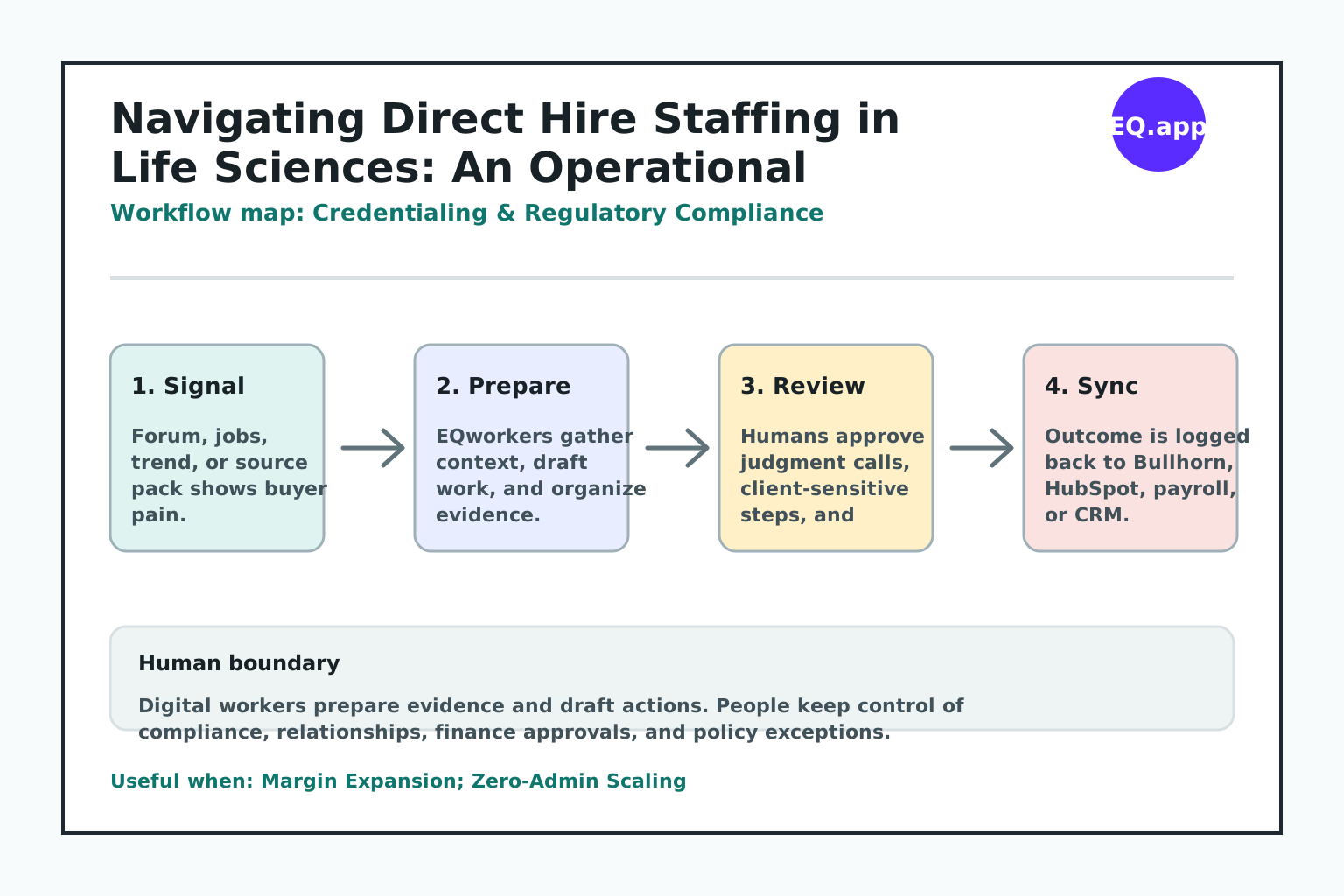
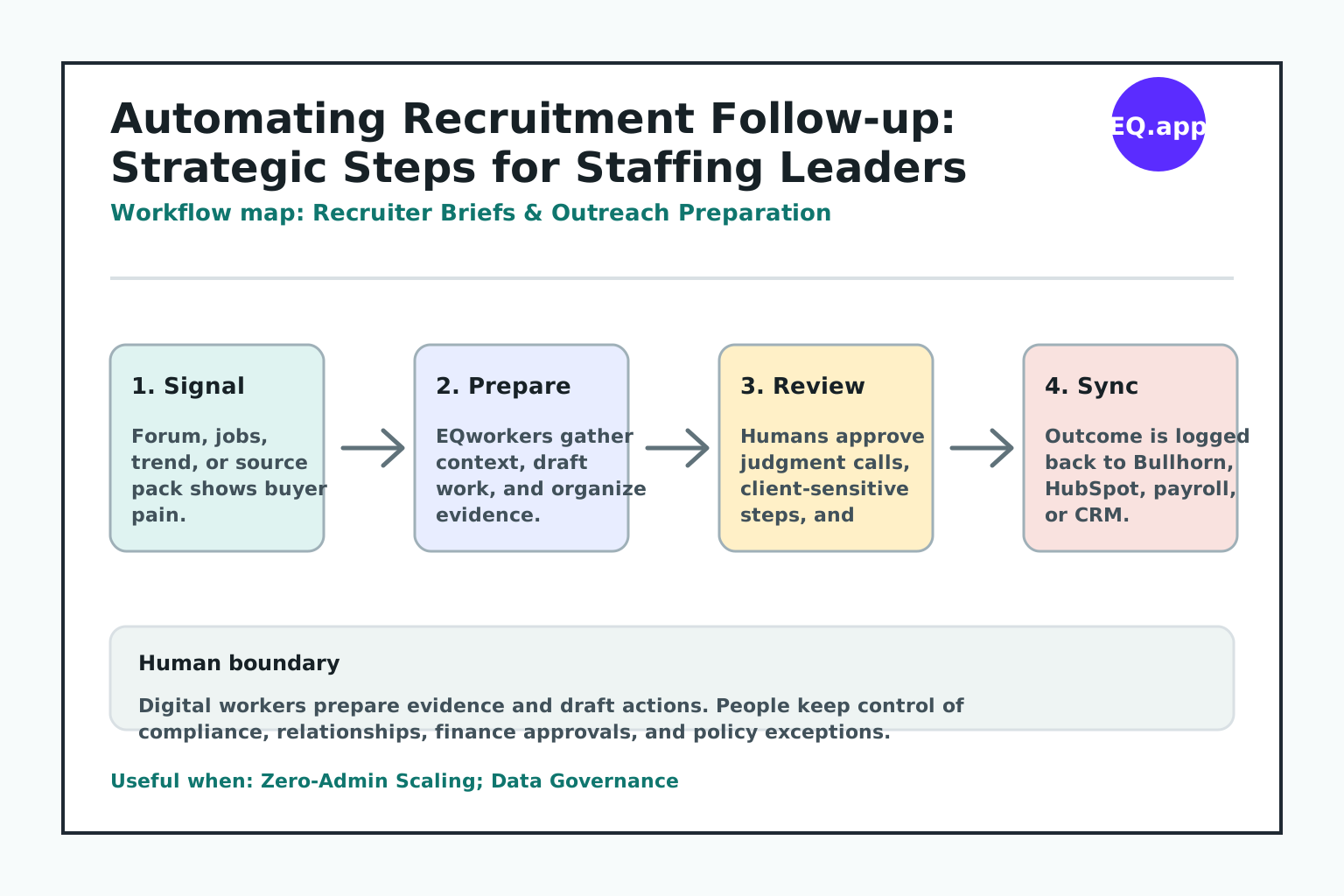
Agentic Process Outsourcing (APO) works best when leaders identify one repeatable workflow, define the Human review, and deploy governed EQworkers to prepare, route, monitor, and log the digital work. The goal is not to remove human judgment; it is to move non-producing administrative drag out of the role so staffing teams can focus on trust, relationships, and exceptions.
The Human review should be explicit: client-sensitive messages, compliance exceptions, finance escalations, candidate relationship decisions, and policy overrides stay with accountable human owners. EQworkers prepare the evidence, draft the action, route the exception, and log the outcome inside governed systems.
Ready to apply this workflow?
Staffing firms create operating leverage by finding repeatable back-office work that can be prepared, routed, monitored, and logged by governed EQworkers while humans keep control of judgment, relationships, and exceptions.
Use the APO Reference Hub, APO vs BPO Cost Matrix, and APO Cost Calculator to evaluate where this workflow fits.
Ready to benchmark your firm's administrative efficiency? Book a Zero-Admin Operations Assessment with the EQ Team to identify the first workflow that should move into an APO operating model.
Ready to apply this workflow?
Staffing firms create operating leverage by finding repeatable back-office work that can be prepared, routed, monitored, and logged by governed EQworkers while humans keep control of judgment, relationships, and exceptions.
Use the APO Reference Hub, APO vs BPO Cost Matrix, and APO Cost Calculator to evaluate where this workflow fits.
Ready to benchmark your firm's administrative efficiency? Book a Zero-Admin Operations Assessment with the EQ Team to identify the first workflow that should move into an APO operating model.
Ready to apply this workflow?
Staffing firms create operating leverage by finding repeatable back-office work that can be prepared, routed, monitored, and logged by governed EQworkers while humans keep control of judgment, relationships, and exceptions.
Use the APO Reference Hub, APO vs BPO Cost Matrix, and APO Cost Calculator to evaluate where this workflow fits.
Ready to benchmark your firm's administrative efficiency? Book a Zero-Admin Operations Assessment with the EQ Team to identify the first workflow that should move into an APO operating model.
Ready to apply this workflow?
Staffing firms create operating leverage by finding repeatable back-office work that can be prepared, routed, monitored, and logged by governed EQworkers while humans keep control of judgment, relationships, and exceptions.
Use the APO Reference Hub, APO vs BPO Cost Matrix, and APO Cost Calculator to evaluate where this workflow fits.
Ready to benchmark your firm's administrative efficiency? Book a Zero-Admin Operations Assessment with the EQ Team to identify the first workflow that should move into an APO operating model.
Ready to apply this workflow?
Staffing firms create operating leverage by finding repeatable back-office work that can be prepared, routed, monitored, and logged by governed EQworkers while humans keep control of judgment, relationships, and exceptions.
Use the APO Reference Hub, APO vs BPO Cost Matrix, and APO Cost Calculator to evaluate where this workflow fits.
Ready to benchmark your firm's administrative efficiency? Book a Zero-Admin Operations Assessment with the EQ Team to identify the first workflow that should move into an APO operating model.
Ready to apply this workflow?
Staffing firms create operating leverage by finding repeatable back-office work that can be prepared, routed, monitored, and logged by governed EQworkers while humans keep control of judgment, relationships, and exceptions.
Use the APO Reference Hub, APO vs BPO Cost Matrix, and APO Cost Calculator to evaluate where this workflow fits.
Ready to benchmark your firm's administrative efficiency? Book a Zero-Admin Operations Assessment with the EQ Team to identify the first workflow that should move into an APO operating model.
Ready to apply this workflow?
Staffing firms create operating leverage by finding repeatable back-office work that can be prepared, routed, monitored, and logged by governed EQworkers while humans keep control of judgment, relationships, and exceptions.
Use the APO Reference Hub, APO vs BPO Cost Matrix, and APO Cost Calculator to evaluate where this workflow fits.
Ready to benchmark your firm's administrative efficiency? Book a Zero-Admin Operations Assessment with the EQ Team to identify the first workflow that should move into an APO operating model.
Ready to apply this workflow?
Staffing firms create operating leverage by finding repeatable back-office work that can be prepared, routed, monitored, and logged by governed EQworkers while humans keep control of judgment, relationships, and exceptions.
Use the APO Reference Hub, APO vs BPO Cost Matrix, and APO Cost Calculator to evaluate where this workflow fits.
Ready to benchmark your firm's administrative efficiency? Book a Zero-Admin Operations Assessment with the EQ Team to identify the first workflow that should move into an APO operating model.
Ready to apply this workflow?
Staffing firms create operating leverage by finding repeatable back-office work that can be prepared, routed, monitored, and logged by governed EQworkers while humans keep control of judgment, relationships, and exceptions.
Use the APO Reference Hub, APO vs BPO Cost Matrix, and APO Cost Calculator to evaluate where this workflow fits.
Ready to benchmark your firm's administrative efficiency? Book a Zero-Admin Operations Assessment with the EQ Team to identify the first workflow that should move into an APO operating model.
Benchmark this workflow with EQ.app
Staffing firms create operating leverage by finding repeatable back-office work that can be prepared, routed, monitored, and logged by governed EQworkers while humans keep control of judgment, relationships, and exceptions.
Use the APO Reference Hub, APO vs BPO Cost Matrix, and APO Cost Calculator to evaluate where this workflow fits.
Ready to benchmark your firm's administrative efficiency? Book a Zero-Admin Operations Assessment with the EQ Team to identify the first workflow that should move into an APO operating model.
Ask AI about this article
Open a separate AI tool with a prefilled question about EQ.app, APO, and this article.
Comments ()