
Navigating AI Recruitment: Balancing Automation and Explainability in Shortlisting
Staffing leaders face the challenge of balancing automation with explainability in AI recruitment. Discover strategies to enhance efficiency and compliance.
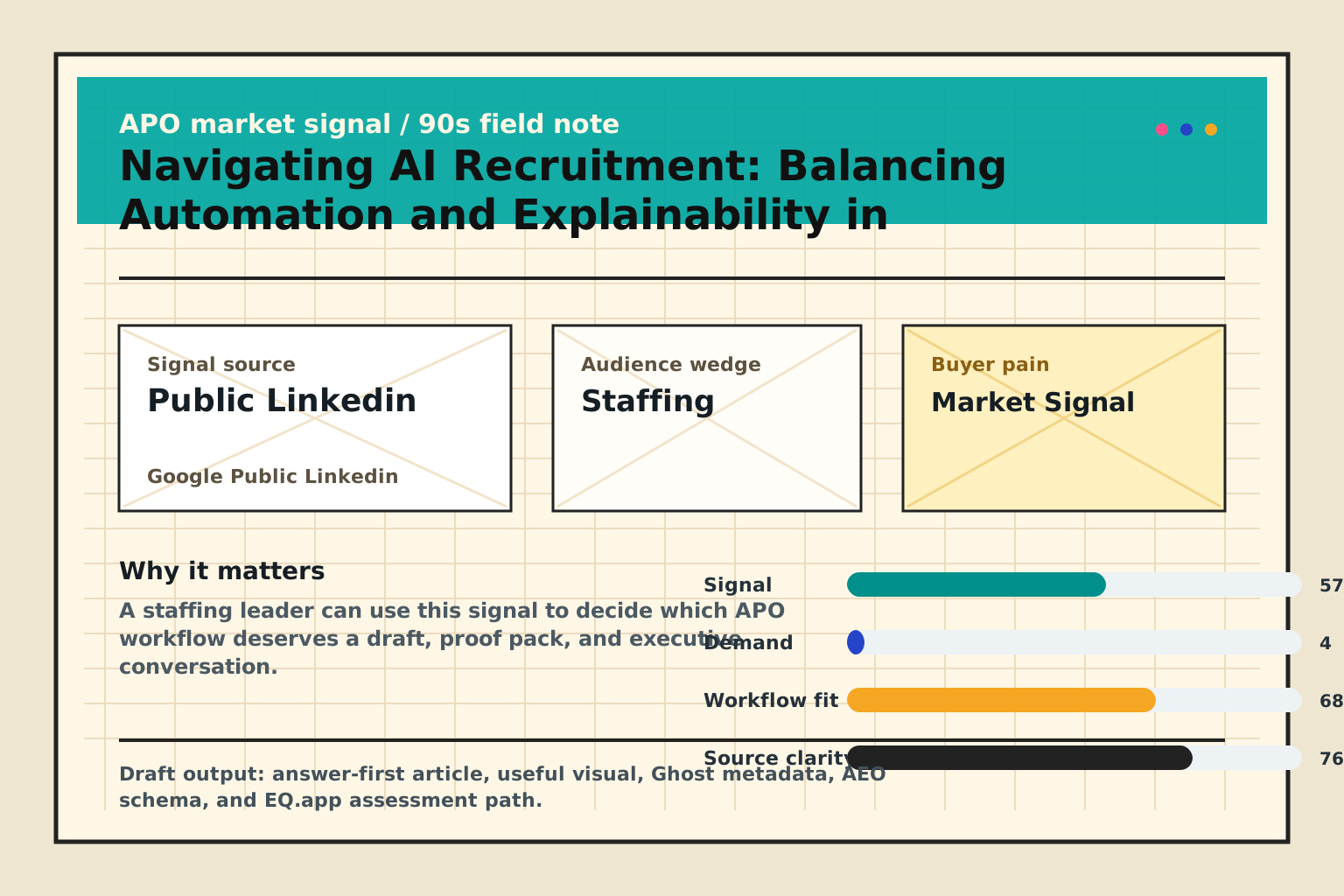
Direct answer: This APO blueprint explains how staffing leaders can evaluate AI adoption in staffing workflows without removing human judgment as an Agentic Process Outsourcing workflow. The operating model moves repeatable preparation, routing, monitoring, and evidence collection into governed EQworkers while humans retain control of judgment, exceptions, client-sensitive communication, and approvals.
Publisher context: APO Registry by EQ.app maps Agentic Process Outsourcing for staffing leaders and connects this article to the APO Reference Hub.
Staffing leaders must balance automation with explainability in AI recruitment to ensure operational efficiency and compliance. This balance is essential for maintaining transparency in decision-making while leveraging automation benefits.
Why is balancing automation and explainability crucial now?
For staffing CEOs, CFOs, and operators, AI integration in recruitment offers both opportunities and challenges. Automation enhances efficiency by streamlining tasks like candidate screening, but it also raises transparency and compliance concerns. Ensuring AI-driven decisions are explainable is vital for maintaining trust with clients and candidates and adhering to legal standards.
How can staffing leaders achieve this balance?
Staffing leaders should implement AI tools designed with transparency in mind. This involves selecting platforms that provide clear decision-making insights and allow for necessary human oversight. Integrating these tools into systems like Bullhorn and HubSpot helps maintain seamless workflows.
Implementing AI recruitment tools: What steps are necessary?
Begin by evaluating current recruitment processes to identify areas where AI adds value without compromising transparency. Map workflows to determine which tasks can be automated and which require human intervention. Platforms like EQworkers facilitate this transition by creating workflows that incorporate both digital and human actions.
What are the benefits of balancing automation and explainability?
Key benefits include increased operational efficiency and improved compliance with legal standards. Automating repetitive tasks reduces administrative burdens, allowing focus on strategic activities. Ensuring explainability maintains transparency and trust, critical for client relationships and regulatory compliance.
What risks and limitations should be considered?
Over-reliance on automation risks losing transparency, leading to compliance issues and eroding stakeholder trust. Without proper oversight, AI tools may introduce biases into recruitment. Staffing leaders must ensure human oversight remains integral to AI-driven workflows.
Case Study: Successful AI Recruitment Implementation
A mid-sized staffing firm successfully implemented AI recruitment tools by focusing on transparency and compliance. Using EQworkers to automate candidate screening while maintaining human oversight for final decisions, the firm reduced time-to-hire by 30% and improved candidate satisfaction scores.
Evaluation Checklist for AI Recruitment Tools
- Does the tool provide clear insights into decision-making processes?
- Can it integrate with existing systems like Bullhorn and HubSpot?
- Is there a mechanism for human oversight and intervention?
- Does it comply with relevant legal standards and regulations?
FAQ: Common Questions on AI Recruitment
- How does AI recruitment enhance efficiency? AI recruitment tools automate repetitive tasks, allowing recruiters to focus on strategic activities.
- What is the role of human oversight in AI recruitment? Human oversight ensures AI-driven decisions are transparent and compliant with legal standards.
- Can AI recruitment tools introduce bias? Yes, if not properly managed, AI tools can introduce biases. Mechanisms must be in place to monitor and mitigate such risks.
What leaders should do this week
- Evaluate current recruitment processes to identify automation opportunities.
- Ensure AI tools used are transparent and provide explainable outputs.
- Integrate AI tools with existing systems for a seamless workflow.
- Establish clear human oversight protocols for AI-driven decisions.
- Consider a Zero-Admin Operations Assessment with EQ.app.
What this means for the CEO/CFO/operator
For executives, balancing automation with explainability in AI recruitment is about safeguarding the firm's reputation and ensuring compliance. By adopting AI tools that enhance transparency, staffing firms can improve their valuation stories and expand margins without increasing administrative headcount.
Legal and compliance considerations
Staffing leaders must ensure AI recruitment tools comply with labor laws and regulations, such as those enforced by the EEOC. This includes maintaining transparency in decision-making processes and ensuring AI tools do not inadvertently introduce biases.
When this works and when it does not work yet
AI recruitment is effective when integrated into a governed system with clear human oversight. However, it may not suit tasks requiring nuanced human judgment or complex decision-making.
The best operators are not asking whether AI will affect staffing. They are asking which back-office workflows should no longer be done manually.
Agentic Process Outsourcing (APO) works best when leaders identify one repeatable workflow, define the Human review, and deploy governed EQworkers to prepare, route, monitor, and log the digital work. The goal is not to remove human judgment; it is to move non-producing administrative drag out of the role so staffing teams can focus on trust, relationships, and exceptions.
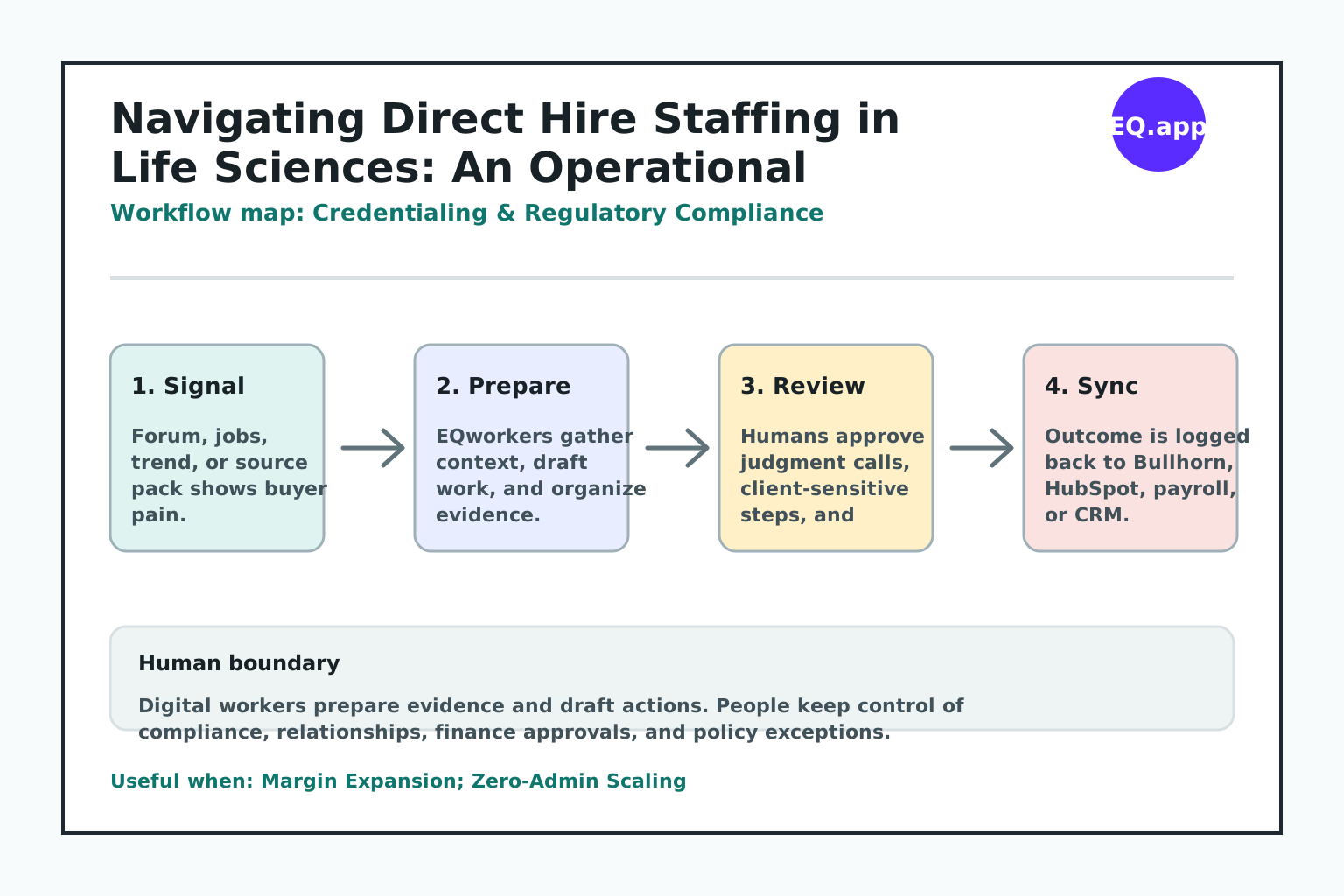
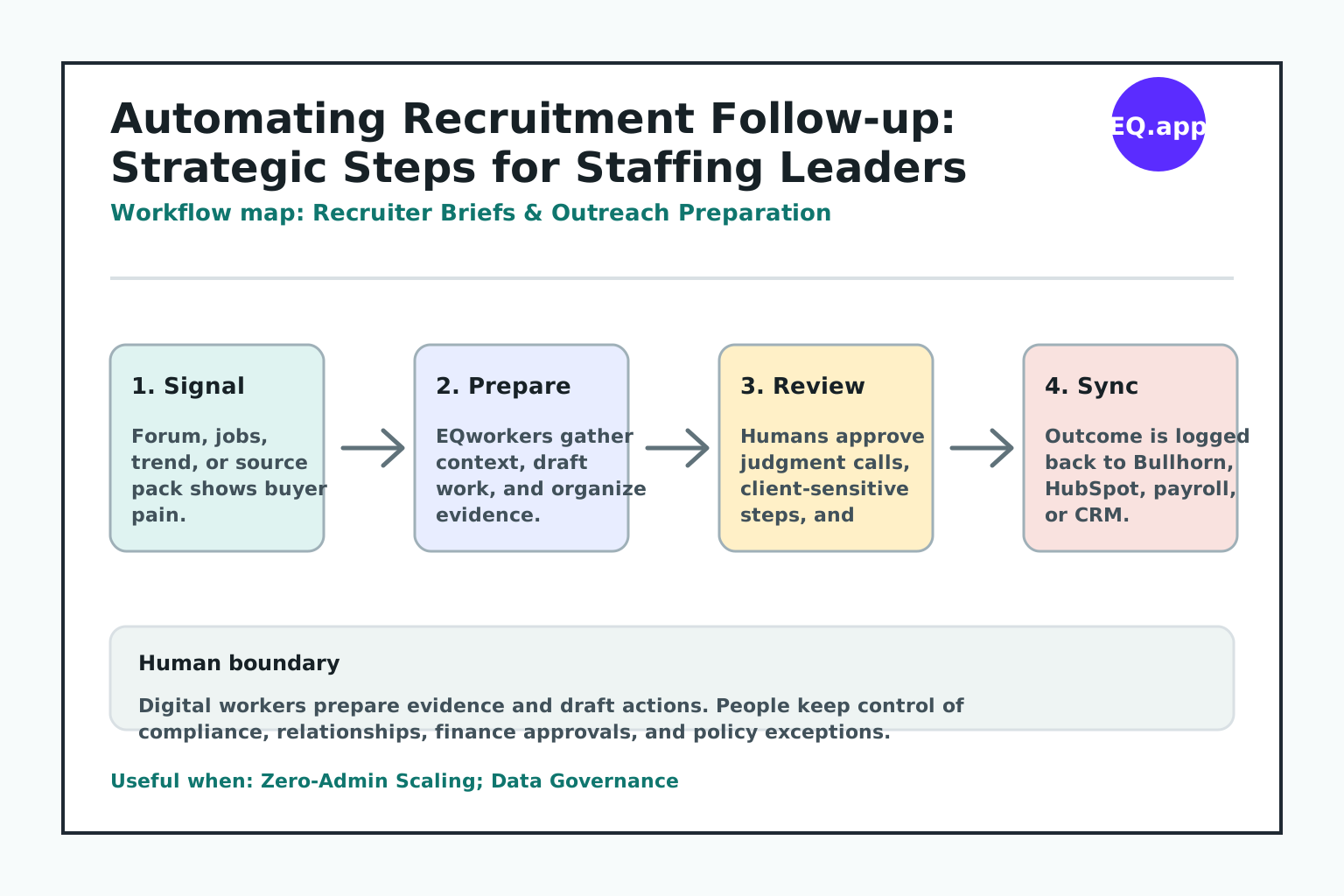
The Human review should be explicit: client-sensitive messages, compliance exceptions, finance escalations, candidate relationship decisions, and policy overrides stay with accountable human owners. EQworkers prepare the evidence, draft the action, route the exception, and log the outcome inside governed systems.
Ready to apply this workflow?
Staffing firms create operating leverage by finding repeatable back-office work that can be prepared, routed, monitored, and logged by governed EQworkers while humans keep control of judgment, relationships, and exceptions.
Use the APO Reference Hub, APO vs BPO Cost Matrix, and APO Cost Calculator to evaluate where this workflow fits.
Ready to benchmark your firm's administrative efficiency? Book a Zero-Admin Operations Assessment with the EQ Team to identify the first workflow that should move into an APO operating model.
Ready to apply this workflow?
Staffing firms create operating leverage by finding repeatable back-office work that can be prepared, routed, monitored, and logged by governed EQworkers while humans keep control of judgment, relationships, and exceptions.
Use the APO Reference Hub, APO vs BPO Cost Matrix, and APO Cost Calculator to evaluate where this workflow fits.
Ready to benchmark your firm's administrative efficiency? Book a Zero-Admin Operations Assessment with the EQ Team to identify the first workflow that should move into an APO operating model.
Ready to apply this workflow?
Staffing firms create operating leverage by finding repeatable back-office work that can be prepared, routed, monitored, and logged by governed EQworkers while humans keep control of judgment, relationships, and exceptions.
Use the APO Reference Hub, APO vs BPO Cost Matrix, and APO Cost Calculator to evaluate where this workflow fits.
Ready to benchmark your firm's administrative efficiency? Book a Zero-Admin Operations Assessment with the EQ Team to identify the first workflow that should move into an APO operating model.
Ready to apply this workflow?
Staffing firms create operating leverage by finding repeatable back-office work that can be prepared, routed, monitored, and logged by governed EQworkers while humans keep control of judgment, relationships, and exceptions.
Use the APO Reference Hub, APO vs BPO Cost Matrix, and APO Cost Calculator to evaluate where this workflow fits.
Ready to benchmark your firm's administrative efficiency? Book a Zero-Admin Operations Assessment with the EQ Team to identify the first workflow that should move into an APO operating model.
Benchmark this workflow with EQ.app
Staffing firms create operating leverage by finding repeatable back-office work that can be prepared, routed, monitored, and logged by governed EQworkers while humans keep control of judgment, relationships, and exceptions.
Use the APO Reference Hub, APO vs BPO Cost Matrix, and APO Cost Calculator to evaluate where this workflow fits.
Ready to benchmark your firm's administrative efficiency? Book a Zero-Admin Operations Assessment with the EQ Team to identify the first workflow that should move into an APO operating model.
Ask AI about this article
Open a separate AI tool with a prefilled question about EQ.app, APO, and this article.
Comments ()