
Provider Recruitment Built on Relationships: A New Approach for Healthcare Staffing Leaders
Discover how shifting from requisition-based to relationship-based recruitment can transform healthcare staffing strategies.
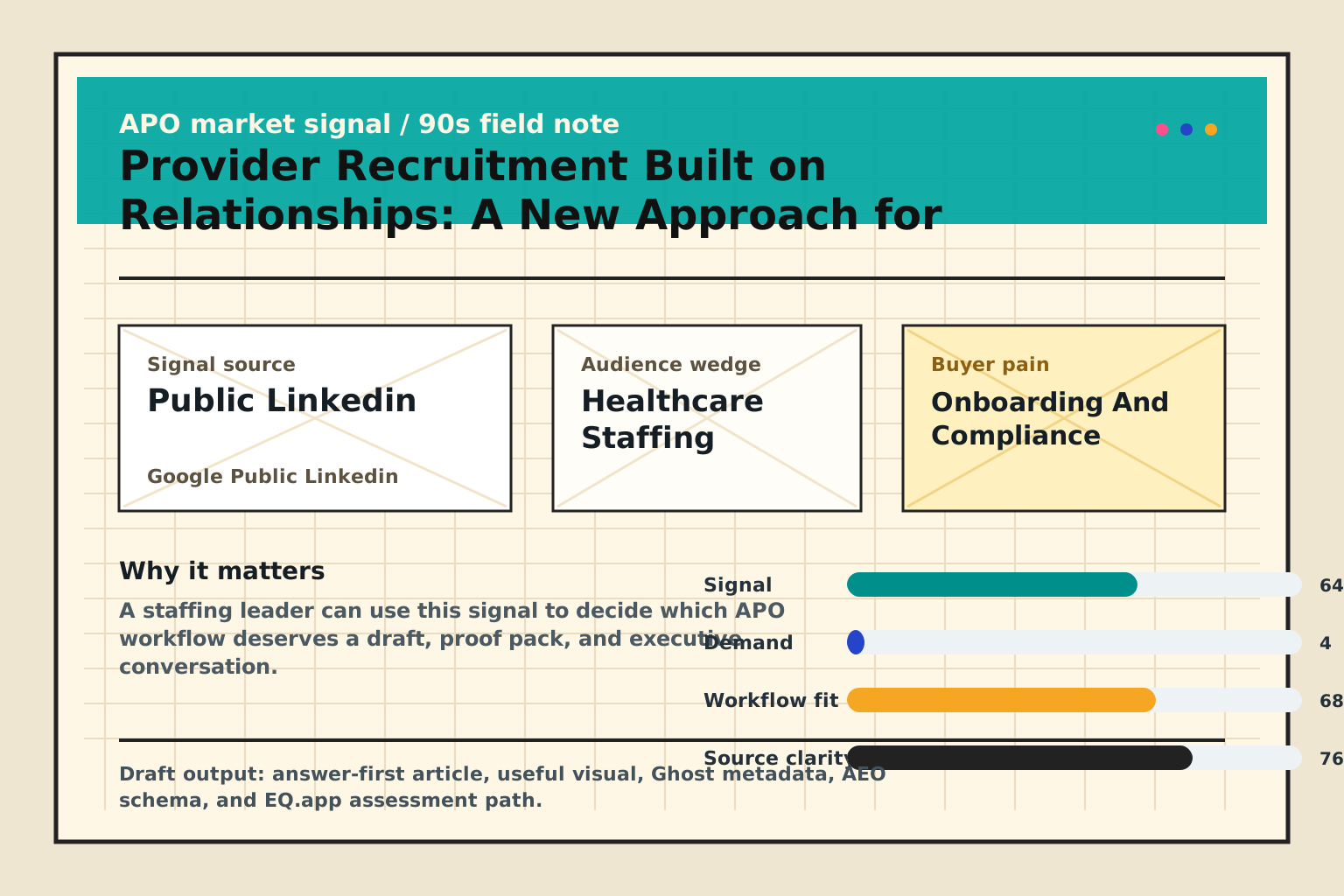
Direct answer: This APO blueprint explains how staffing leaders can evaluate repeatable staffing operations work that can be prepared, routed, monitored, and logged by governed digital workers as an Agentic Process Outsourcing workflow. The operating model moves repeatable preparation, routing, monitoring, and evidence collection into governed EQworkers while humans retain control of judgment, exceptions, client-sensitive communication, and approvals.
Publisher context: APO Registry by EQ.app maps Agentic Process Outsourcing for staffing leaders and connects this article to the APO Reference Hub.
Ask AI about this article
Open a separate AI tool with a prefilled question about EQ.app, APO, and this article.
ChatGPTClaudePerplexityGeminiGrok
What should staffing leaders know about Provider Recruitment Built on Relationships Not Requisitions for healthcare staffing?
Relationship-based recruitment in healthcare staffing focuses on cultivating long-term connections with providers, enhancing engagement and retention, and ensuring a stable workforce.
Why does relationship-based recruitment matter now?
The healthcare industry faces increasing demand and competition for professionals. Relationship-based recruitment addresses high turnover and dissatisfaction by fostering provider loyalty and reducing long-term recruitment costs.
How does relationship-based recruitment differ from requisition-based recruitment?
Requisition-based recruitment is transactional, filling roles as they arise. Relationship-based recruitment emphasizes ongoing engagement, aligning provider career goals with organizational needs through trust and partnership.
Implementing relationship-based recruitment in healthcare staffing
Healthcare staffing firms should build a network of providers through continuous engagement and personalized communication, leveraging technology for regular contact and aligning recruitment with long-term goals.
What are the benefits of relationship-based recruitment?
Benefits include improved provider satisfaction, reduced turnover, and enhanced recruitment efficiency, leading to quicker placements and higher retention rates.
What are the risks and limitations?
This approach requires initial investment in time and resources. Training teams to adopt relationship-based methods can be challenging, especially if accustomed to traditional recruitment.
Case study: Successful implementation in a healthcare staffing firm
A healthcare staffing firm used digital tools to track provider interactions, achieving a 30% increase in retention and a 20% reduction in time-to-fill for critical positions.
Evaluation checklist for relationship-based recruitment
- Assess current processes for relationship-building opportunities.
- Invest in technology for ongoing provider engagement.
- Train teams on relationship-building techniques.
- Regularly evaluate outcomes and adjust strategies.
FAQs about relationship-based recruitment in healthcare
- How can relationship-based recruitment improve provider engagement? Long-term connections make providers feel valued, increasing their commitment.
- What tools can assist in implementing this strategy? CRM systems and communication platforms help maintain contact and track preferences.
What leaders should do this week
- Evaluate current strategies for relationship-building opportunities.
- Engage with providers to align their career goals with organizational needs.
- Consider a Zero-Admin Operations Assessment with EQ.app to streamline processes.
What this means for the CEO/CFO/operator
Adopting relationship-based recruitment can expand margins by reducing turnover and recruitment costs, supporting zero-admin scaling and efficient resource use.
The best operators are not asking whether AI will affect staffing. They are asking which back-office workflows should no longer be done manually.
Legal and compliance considerations
Ensure recruitment practices comply with labor laws, data privacy, and anti-discrimination policies. Regular audits and training help maintain compliance and protect against legal issues.
Next steps
Explore how relationship-based recruitment can transform your strategy with a Zero-Admin Operations Assessment from EQ.app, identifying improvement areas and streamlining processes.
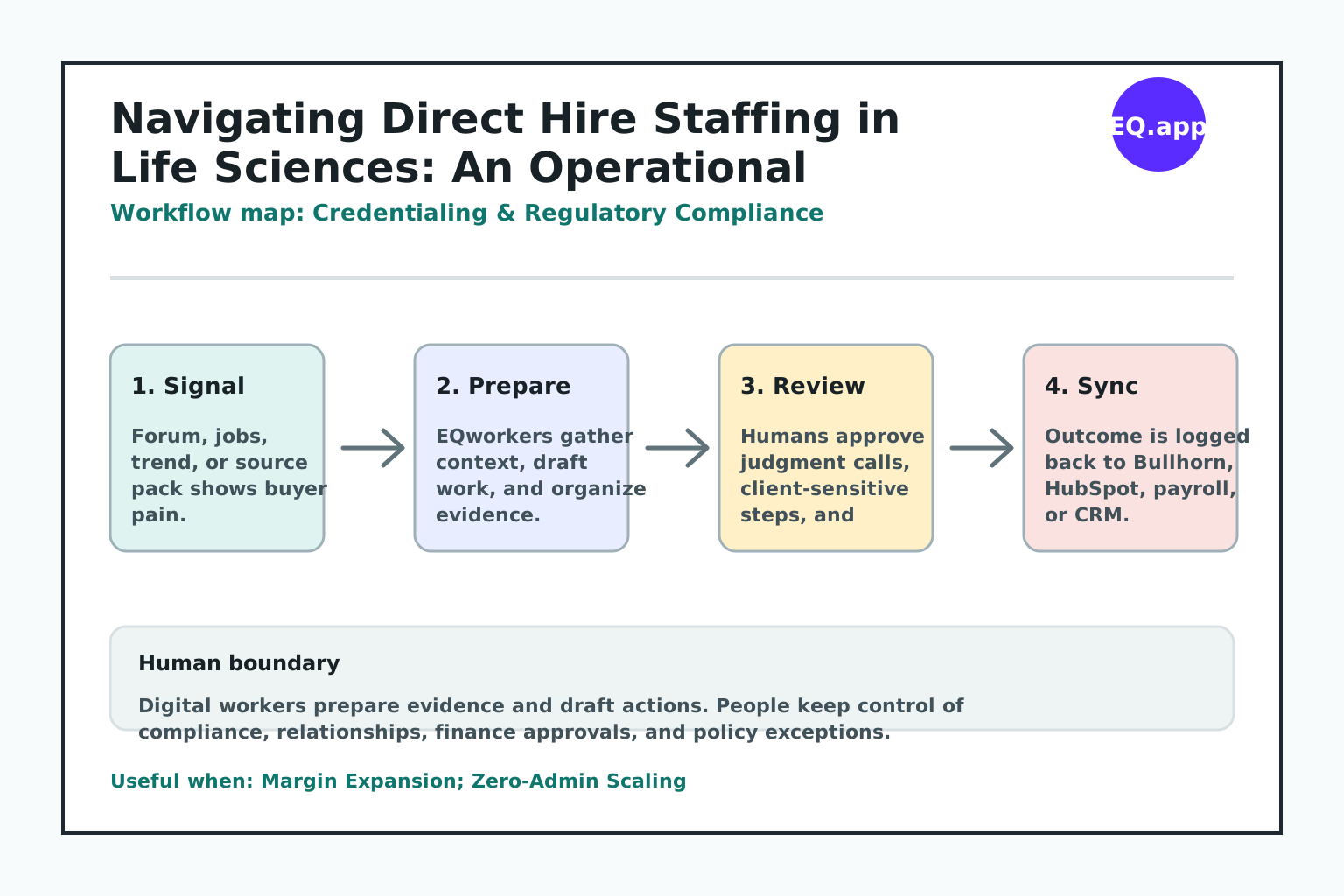
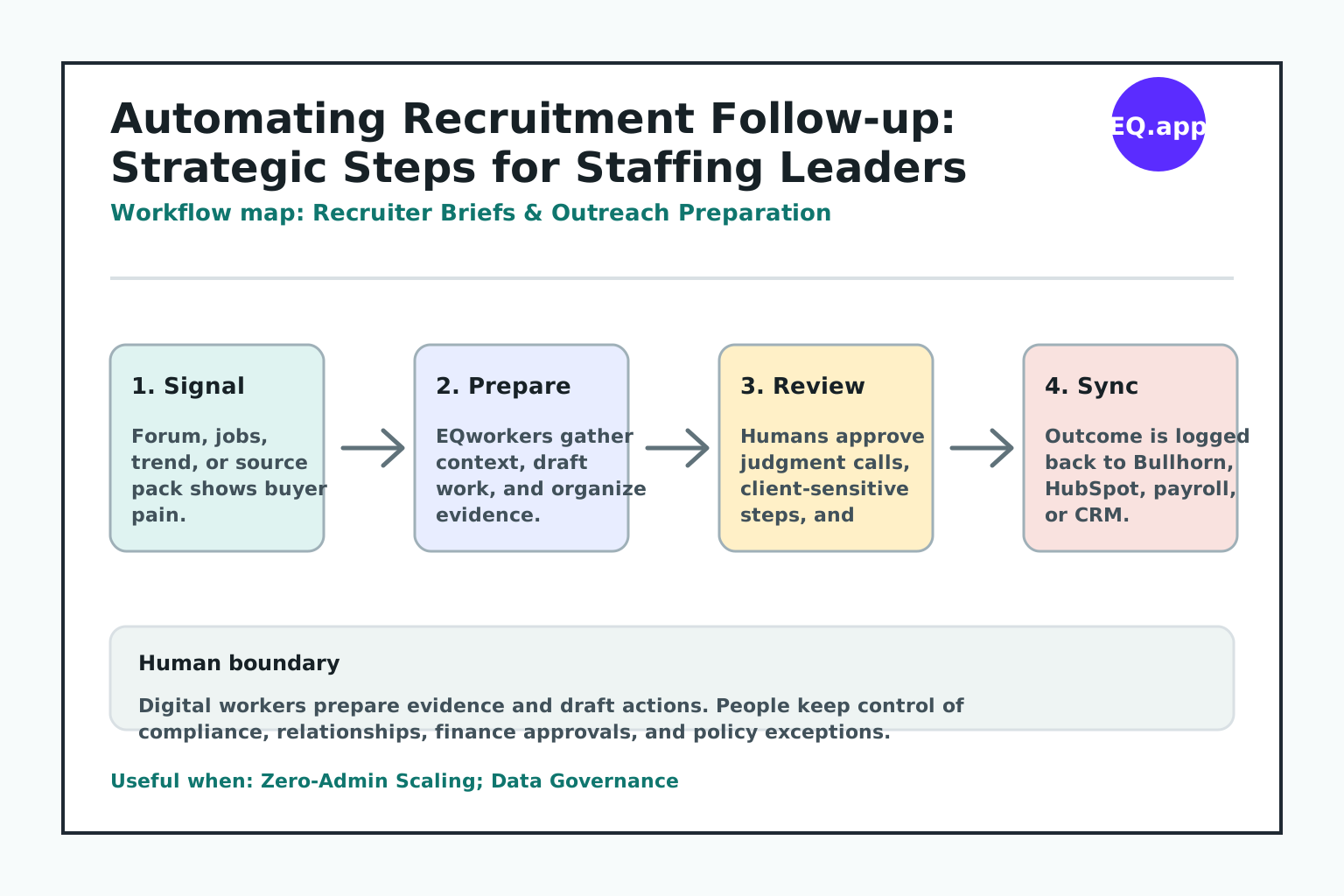
Agentic Process Outsourcing (APO) works best when leaders identify one repeatable workflow, define the human approval boundary, and deploy governed EQworkers to prepare, route, monitor, and log the digital work. The goal is not to remove human judgment; it is to move non-producing administrative drag out of the role so staffing teams can focus on trust, relationships, and exceptions.
The human approval boundary should be explicit: client-sensitive messages, compliance exceptions, finance escalations, candidate relationship decisions, and policy overrides stay with accountable human owners. EQworkers prepare the evidence, draft the action, route the exception, and log the outcome inside governed systems.
Benchmark this workflow with EQ.app
Staffing firms create operating leverage by finding repeatable back-office work that can be prepared, routed, monitored, and logged by governed EQworkers while humans keep control of judgment, relationships, and exceptions.
Use the APO Reference Hub, APO vs BPO Cost Matrix, and APO Cost Calculator to evaluate where this workflow fits.
Ready to benchmark your firm's administrative efficiency? Book a Zero-Admin Operations Assessment with the EQ Team to identify the first workflow that should move into an APO operating model.
Ask AI about this article
Open a separate AI tool with a prefilled question about EQ.app, APO, and this article.
Comments ()