
The Retention Math That Actually Moves the Needle: Insights for Healthcare Staffing Leaders
Explore how retention math can significantly impact healthcare staffing and how EQworkers can streamline operations.
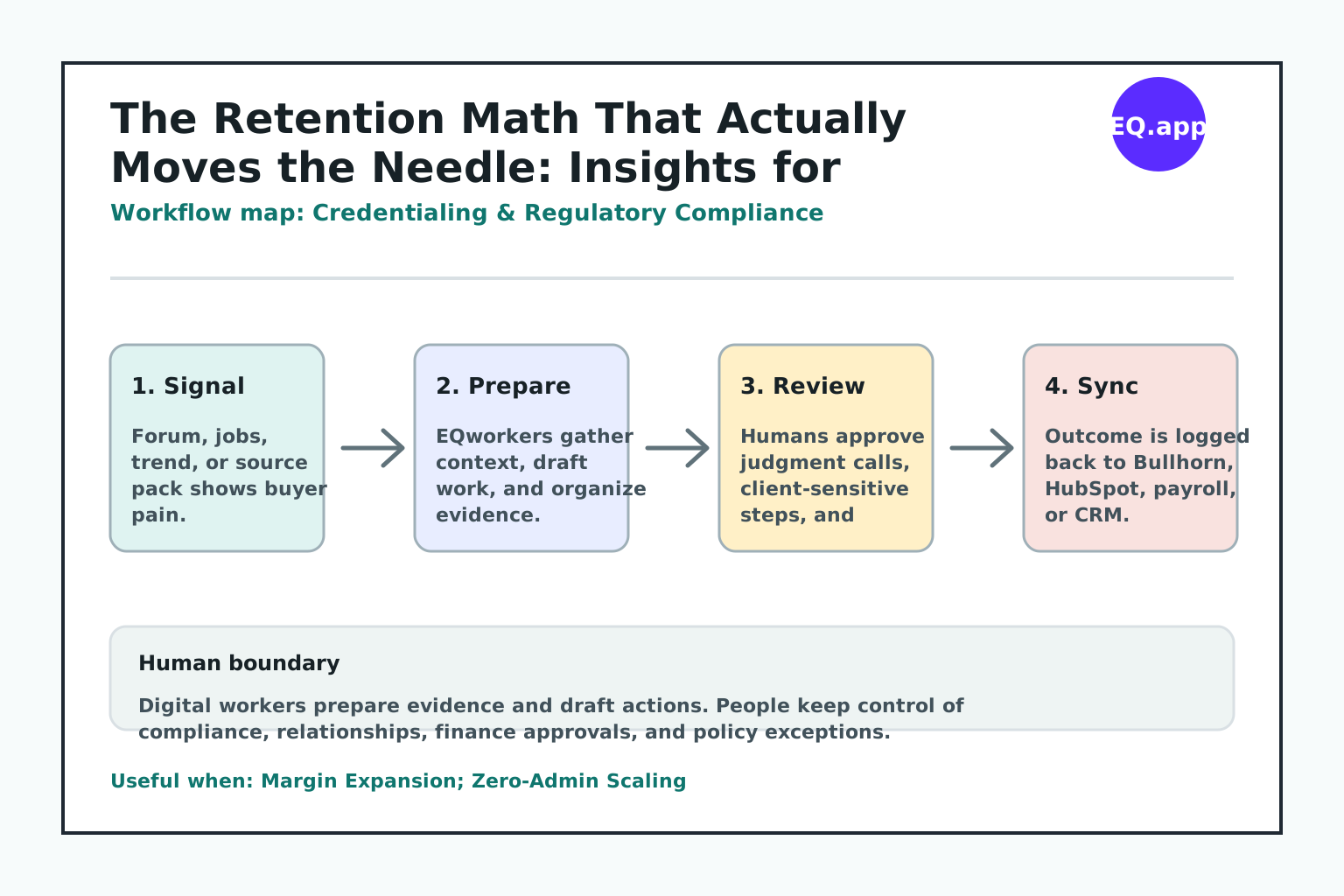
Direct answer: This APO blueprint explains how staffing leaders can evaluate repeatable staffing operations work that can be prepared, routed, monitored, and logged by governed digital workers as an Agentic Process Outsourcing workflow. The operating model moves repeatable preparation, routing, monitoring, and evidence collection into governed EQworkers while humans retain control of judgment, exceptions, client-sensitive communication, and approvals.
Publisher context: APO Registry by EQ.app maps Agentic Process Outsourcing for staffing leaders and connects this article to the APO Reference Hub.
Retention math is essential for healthcare staffing leaders to understand and reduce turnover costs, directly impacting operational efficiency and financial performance. By applying these principles, leaders can optimize staffing processes, reduce costs, and improve staff retention rates.
Why does retention math matter in healthcare staffing?
High turnover rates in healthcare staffing disrupt operations and inflate costs. Retention math provides a structured approach to quantify and address these challenges, enabling leaders to make data-driven decisions that enhance workforce stability and reduce financial strain. With turnover rates averaging 22.7% across roles, mastering retention math is crucial for maintaining operational continuity and financial health.
What are the key principles of retention math?
Retention math involves calculating turnover costs by considering factors such as employee departures, vacancy durations, and expenses to cover these gaps. This approach helps staffing leaders pinpoint significant cost drivers and develop targeted strategies to mitigate them. By focusing on these metrics, leaders can prioritize interventions that yield the highest return on investment in retention and cost savings.
How can EQworkers facilitate retention math in staffing workflows?
EQworkers enhances traditional staffing processes by automating repetitive tasks and ensuring compliance through agentic workflows. For instance, EQworkers can manage credentialing and regulatory compliance, allowing human resources to concentrate on strategic retention initiatives. This automation reduces administrative burdens and improves accuracy and speed, leading to better retention outcomes.
What are the benefits of using retention math in staffing operations?
Implementing retention math can reduce turnover costs, improve staff morale, and enhance patient care continuity. By systematically addressing high turnover factors, healthcare staffing leaders can create a more stable and engaged workforce, ultimately leading to better patient outcomes and financial performance.
What are the risks and limitations of retention math?
While retention math offers valuable insights, it has limitations. Over-reliance on quantitative data can overlook qualitative factors like employee satisfaction and organizational culture. Additionally, retention strategies' effectiveness may vary across healthcare settings, necessitating tailored approaches to address unique challenges.
Can you provide a concrete example of retention math application?
Consider a healthcare staffing firm facing high nurse turnover. By applying retention math, the firm identifies that prolonged vacancies are costly. Implementing a targeted recruitment and retention strategy, the firm reduces vacancy durations and associated costs by 15% within six months.
How should staffing leaders evaluate retention strategies?
Staffing leaders should evaluate retention strategies by assessing their impact on turnover rates, cost savings, and employee satisfaction. Regularly reviewing these metrics allows leaders to refine approaches and ensure alignment with organizational goals. Tools like the EQ.app Zero-Admin Operations Assessment provide further insights into optimizing staffing processes.
FAQ on retention math in healthcare staffing
- What is the average retention rate in healthcare? The average turnover rate in healthcare is approximately 22.7%, with nursing positions experiencing the highest rates.
- How can retention math improve staffing efficiency? By identifying and addressing primary turnover cost drivers, retention math streamlines staffing operations and reduces unnecessary expenses.
- What role does EQworkers play in retention strategies? EQworkers automate compliance and credentialing tasks, allowing human resources to focus on strategic retention initiatives.
What should staffing leaders do this week?
- Review current turnover metrics and identify key cost drivers using retention math principles.
- Engage with EQ.app for a Zero-Admin Operations Assessment to explore automation opportunities.
- Develop targeted retention strategies based on data-driven insights.
- Monitor the impact of implemented strategies on turnover rates and adjust as needed.
What this means for the CEO/CFO/operator
For CEOs and CFOs, understanding and applying retention math can significantly expand margins by reducing turnover-related costs. Operators can leverage EQworkers to streamline compliance and credentialing workflows, enhancing operational efficiency and enabling zero-admin scaling. By focusing on retention, staffing leaders can strengthen valuation stories and improve overall firm performance.
Ready to optimize your staffing operations? Engage with EQ.app for a Zero-Admin Operations Assessment and discover how retention math can transform your healthcare staffing processes.
The best operators are not asking whether AI will affect staffing. They are asking which back-office workflows should no longer be done manually.
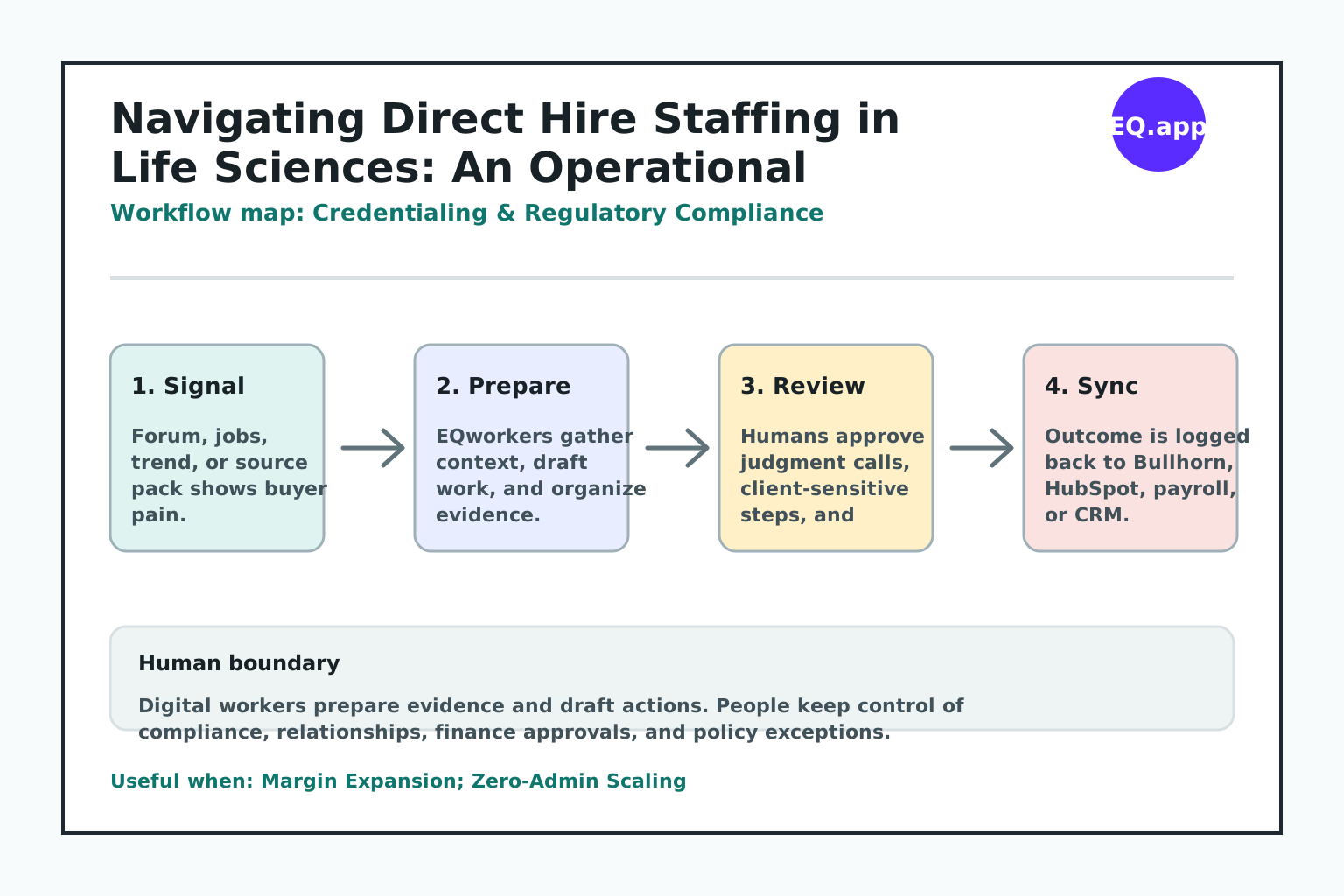
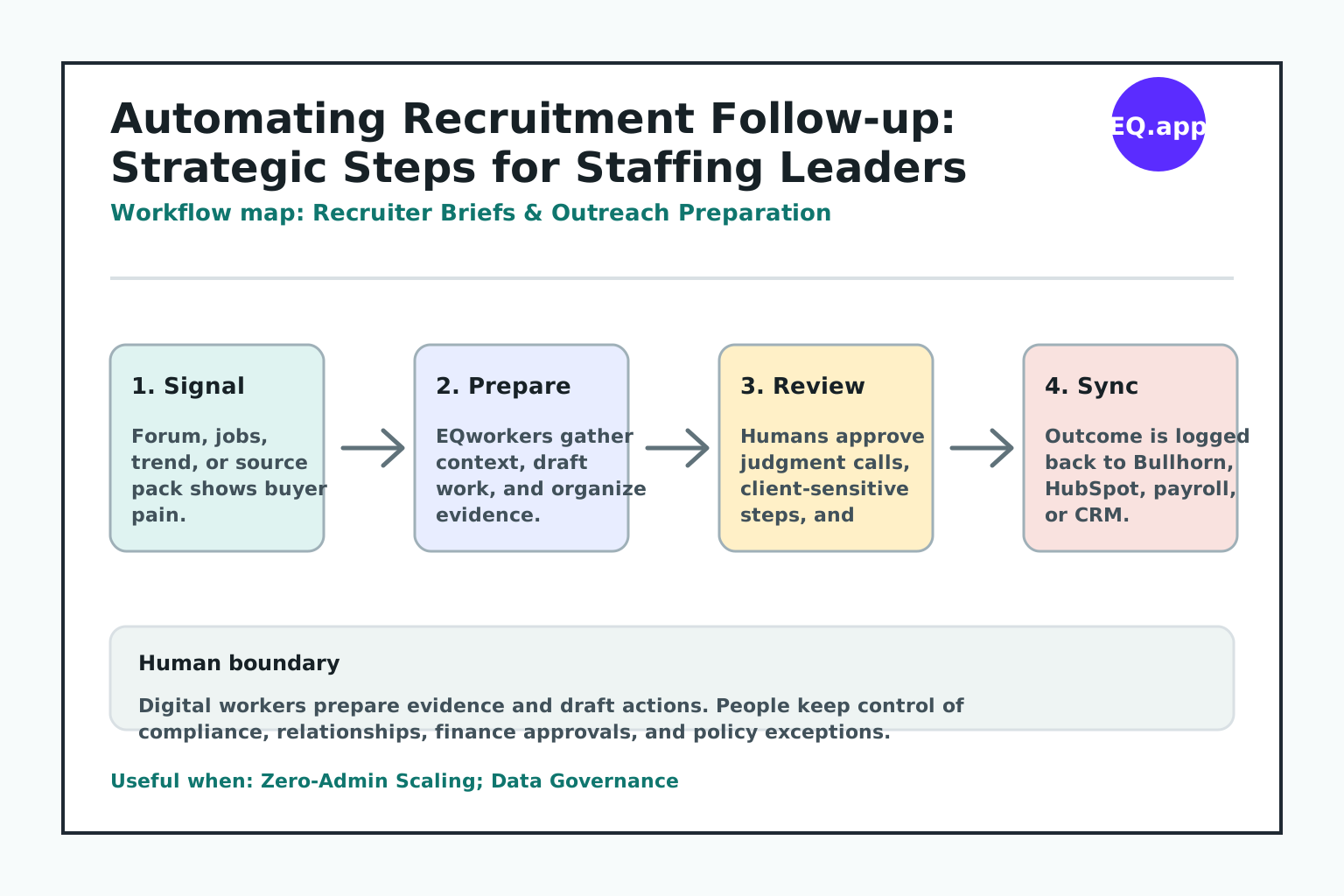
Agentic Process Outsourcing (APO) works best when leaders identify one repeatable workflow, define the Human review, and deploy governed EQworkers to prepare, route, monitor, and log the digital work. The goal is not to remove human judgment; it is to move non-producing administrative drag out of the role so staffing teams can focus on trust, relationships, and exceptions.
The Human review should be explicit: client-sensitive messages, compliance exceptions, finance escalations, candidate relationship decisions, and policy overrides stay with accountable human owners. EQworkers prepare the evidence, draft the action, route the exception, and log the outcome inside governed systems.
Ready to apply this workflow?
Staffing firms create operating leverage by finding repeatable back-office work that can be prepared, routed, monitored, and logged by governed EQworkers while humans keep control of judgment, relationships, and exceptions.
Use the APO Reference Hub, APO vs BPO Cost Matrix, and APO Cost Calculator to evaluate where this workflow fits.
Ready to benchmark your firm's administrative efficiency? Book a Zero-Admin Operations Assessment with the EQ Team to identify the first workflow that should move into an APO operating model.
Ready to apply this workflow?
Staffing firms create operating leverage by finding repeatable back-office work that can be prepared, routed, monitored, and logged by governed EQworkers while humans keep control of judgment, relationships, and exceptions.
Use the APO Reference Hub, APO vs BPO Cost Matrix, and APO Cost Calculator to evaluate where this workflow fits.
Ready to benchmark your firm's administrative efficiency? Book a Zero-Admin Operations Assessment with the EQ Team to identify the first workflow that should move into an APO operating model.
Ready to apply this workflow?
Staffing firms create operating leverage by finding repeatable back-office work that can be prepared, routed, monitored, and logged by governed EQworkers while humans keep control of judgment, relationships, and exceptions.
Use the APO Reference Hub, APO vs BPO Cost Matrix, and APO Cost Calculator to evaluate where this workflow fits.
Ready to benchmark your firm's administrative efficiency? Book a Zero-Admin Operations Assessment with the EQ Team to identify the first workflow that should move into an APO operating model.
Ready to apply this workflow?
Staffing firms create operating leverage by finding repeatable back-office work that can be prepared, routed, monitored, and logged by governed EQworkers while humans keep control of judgment, relationships, and exceptions.
Use the APO Reference Hub, APO vs BPO Cost Matrix, and APO Cost Calculator to evaluate where this workflow fits.
Ready to benchmark your firm's administrative efficiency? Book a Zero-Admin Operations Assessment with the EQ Team to identify the first workflow that should move into an APO operating model.
Ready to apply this workflow?
Staffing firms create operating leverage by finding repeatable back-office work that can be prepared, routed, monitored, and logged by governed EQworkers while humans keep control of judgment, relationships, and exceptions.
Use the APO Reference Hub, APO vs BPO Cost Matrix, and APO Cost Calculator to evaluate where this workflow fits.
Ready to benchmark your firm's administrative efficiency? Book a Zero-Admin Operations Assessment with the EQ Team to identify the first workflow that should move into an APO operating model.
Ready to apply this workflow?
Staffing firms create operating leverage by finding repeatable back-office work that can be prepared, routed, monitored, and logged by governed EQworkers while humans keep control of judgment, relationships, and exceptions.
Use the APO Reference Hub, APO vs BPO Cost Matrix, and APO Cost Calculator to evaluate where this workflow fits.
Ready to benchmark your firm's administrative efficiency? Book a Zero-Admin Operations Assessment with the EQ Team to identify the first workflow that should move into an APO operating model.
Ready to apply this workflow?
Staffing firms create operating leverage by finding repeatable back-office work that can be prepared, routed, monitored, and logged by governed EQworkers while humans keep control of judgment, relationships, and exceptions.
Use the APO Reference Hub, APO vs BPO Cost Matrix, and APO Cost Calculator to evaluate where this workflow fits.
Ready to benchmark your firm's administrative efficiency? Book a Zero-Admin Operations Assessment with the EQ Team to identify the first workflow that should move into an APO operating model.
Ready to apply this workflow?
Staffing firms create operating leverage by finding repeatable back-office work that can be prepared, routed, monitored, and logged by governed EQworkers while humans keep control of judgment, relationships, and exceptions.
Use the APO Reference Hub, APO vs BPO Cost Matrix, and APO Cost Calculator to evaluate where this workflow fits.
Ready to benchmark your firm's administrative efficiency? Book a Zero-Admin Operations Assessment with the EQ Team to identify the first workflow that should move into an APO operating model.
Ready to apply this workflow?
Staffing firms create operating leverage by finding repeatable back-office work that can be prepared, routed, monitored, and logged by governed EQworkers while humans keep control of judgment, relationships, and exceptions.
Use the APO Reference Hub, APO vs BPO Cost Matrix, and APO Cost Calculator to evaluate where this workflow fits.
Ready to benchmark your firm's administrative efficiency? Book a Zero-Admin Operations Assessment with the EQ Team to identify the first workflow that should move into an APO operating model.
Ready to apply this workflow?
Staffing firms create operating leverage by finding repeatable back-office work that can be prepared, routed, monitored, and logged by governed EQworkers while humans keep control of judgment, relationships, and exceptions.
Use the APO Reference Hub, APO vs BPO Cost Matrix, and APO Cost Calculator to evaluate where this workflow fits.
Ready to benchmark your firm's administrative efficiency? Book a Zero-Admin Operations Assessment with the EQ Team to identify the first workflow that should move into an APO operating model.
Ready to apply this workflow?
Staffing firms create operating leverage by finding repeatable back-office work that can be prepared, routed, monitored, and logged by governed EQworkers while humans keep control of judgment, relationships, and exceptions.
Use the APO Reference Hub, APO vs BPO Cost Matrix, and APO Cost Calculator to evaluate where this workflow fits.
Ready to benchmark your firm's administrative efficiency? Book a Zero-Admin Operations Assessment with the EQ Team to identify the first workflow that should move into an APO operating model.
Benchmark this workflow with EQ.app
Staffing firms create operating leverage by finding repeatable back-office work that can be prepared, routed, monitored, and logged by governed EQworkers while humans keep control of judgment, relationships, and exceptions.
Use the APO Reference Hub, APO vs BPO Cost Matrix, and APO Cost Calculator to evaluate where this workflow fits.
Ready to benchmark your firm's administrative efficiency? Book a Zero-Admin Operations Assessment with the EQ Team to identify the first workflow that should move into an APO operating model.
Ask AI about this article
Open a separate AI tool with a prefilled question about EQ.app, APO, and this article.
Comments ()