
Staffing CFO Playbook: Automating Invoice Aging Exceptions Before Net-90 Friction Spreads
Learn how staffing CFOs can leverage APO digital workers to automate invoice aging exceptions, reducing Net-90 friction and improving cash flow.

Direct answer: This APO blueprint explains how staffing leaders can evaluate invoice aging, payment friction, and staffing cash conversion as an Agentic Process Outsourcing workflow. The operating model moves repeatable preparation, routing, monitoring, and evidence collection into governed EQworkers while humans retain control of judgment, exceptions, client-sensitive communication, and approvals.
Publisher context: APO Registry by EQ.app maps Agentic Process Outsourcing for staffing leaders and connects this article to the APO Reference Hub.
Staffing CFOs can leverage APO digital workers to automate the detection and management of invoice aging exceptions, reducing Net-90 friction and improving cash flow. Integrating these digital workers into financial operations minimizes manual workload, enhances operational efficiency, and protects EBITDA.
In the competitive staffing industry, efficient cash flow management is crucial for operational leverage and sustainable growth. Staffing CEOs, CFOs, and operations leaders must address preventable invoice aging and Net-90 payment friction, which impact cash conversion cycles and firm EBITDA. As demand for faster, more accurate financial operations grows, integrating APO digital workers offers a strategic solution. These digital workers automate routine tasks, allowing finance teams to focus on strategic decision-making and client-sensitive issues.
What are the common causes of invoice aging in staffing firms?
Invoice aging often stems from preventable issues such as missing timecards, delayed client approvals, and discrepancies between Bullhorn and finance records. These issues delay payment cycles, extending the time to convert invoices into cash and increasing Net-90 friction, which strains cash flow and reduces operational efficiency.
How can APO digital workers monitor and manage exception signals?
APO digital workers continuously monitor financial operations, identifying exception signals like missing documentation or approval delays. They gather necessary context, prepare escalation briefs, and route them to human finance owners for approval. Automating these tasks ensures prompt exception handling, reducing prolonged invoice aging risks.
What role do human finance owners play in the APO workflow?
While APO digital workers handle routine monitoring and data gathering, human finance owners are crucial for approving client-sensitive escalations, compliance exceptions, and finance decisions. This oversight ensures critical decisions are made with necessary judgment and expertise, maintaining financial operations' integrity.
How does automating invoice aging exceptions protect EBITDA?
Reducing manual workload and minimizing invoice aging improves cash flow and protects EBITDA. Automation streamlines financial operations, reducing administrative drag and enhancing operational leverage. This efficiency supports margin expansion and positions firms for zero-admin scaling, enabling growth without proportional administrative hiring increases.
What are the steps to implement APO digital workers for invoice management?
Implementing APO digital workers involves several key steps:
- Identify Pain Points: Analyze financial operations to identify common causes of invoice aging and Net-90 friction.
- Design Agentic Workflows: Use EQworkers to create workflows that automate routine tasks while ensuring human oversight for sensitive decisions.
- Integrate with Systems: Ensure seamless integration with existing systems like Bullhorn and HubSpot for synchronized operations.
- Monitor and Adjust: Continuously monitor digital workers' effectiveness and adjust workflows as necessary to optimize performance.
What leaders should do this week
- Conduct a Margin Leak Estimate to identify areas where invoice aging impacts cash flow.
- Engage with EQ.app for a Zero-Admin Assessment to evaluate readiness for digital worker integration.
- Map current financial workflows and identify tasks suitable for automation with APO digital workers.
- Establish clear human approval boundaries for client-sensitive and compliance-related decisions.
- Train finance teams on new workflows to ensure smooth adoption and operation.
What this means for the CEO/CFO/operator
For staffing CEOs and CFOs, integrating APO digital workers into financial operations offers a strategic advantage. Reducing administrative drag enhances EBITDA and strengthens valuation stories. Zero-admin scaling becomes achievable, allowing growth without additional administrative hires. This digital transformation improves operational efficiency and positions staffing firms as leaders in financial innovation.
Legal/Compliance Considerations
When implementing APO digital workers, staffing firms must ensure compliance with labor laws and financial regulations. Human oversight is crucial for client-sensitive decisions and compliance exceptions, maintaining financial operations' integrity and legality. Firms should establish clear guidelines and training for finance teams to navigate these complexities effectively.
How does this workflow connect to staffing systems?
| Input | EQworker action | Human review | System sync |
|---|---|---|---|
| Invoice Data | Monitor for exceptions, gather context | Client-sensitive escalations | Bullhorn/HubSpot |
| Timecard Records | Prepare escalation briefs | Compliance exceptions | Bullhorn/HubSpot |
What changed in 2026?
As automation and AI reshape financial operations, staffing firms must adapt to remain competitive. The growing use of APO digital workers reflects a broader trend toward digital transformation in finance, driven by the need for efficiency and scalability. Embracing these technologies helps staffing firms navigate invoice aging and Net-90 friction challenges more effectively, ensuring sustainable growth and profitability.
The best operators are not asking whether AI will affect staffing. They are asking which back-office workflows should no longer be done manually.
How can staffing leaders evaluate this APO opportunity?
Ready to transform your financial operations? Visit EQ.app for a Margin Leak Estimate or Job Automation Readiness Review and discover how APO digital workers can enhance your staffing firm's efficiency and profitability.
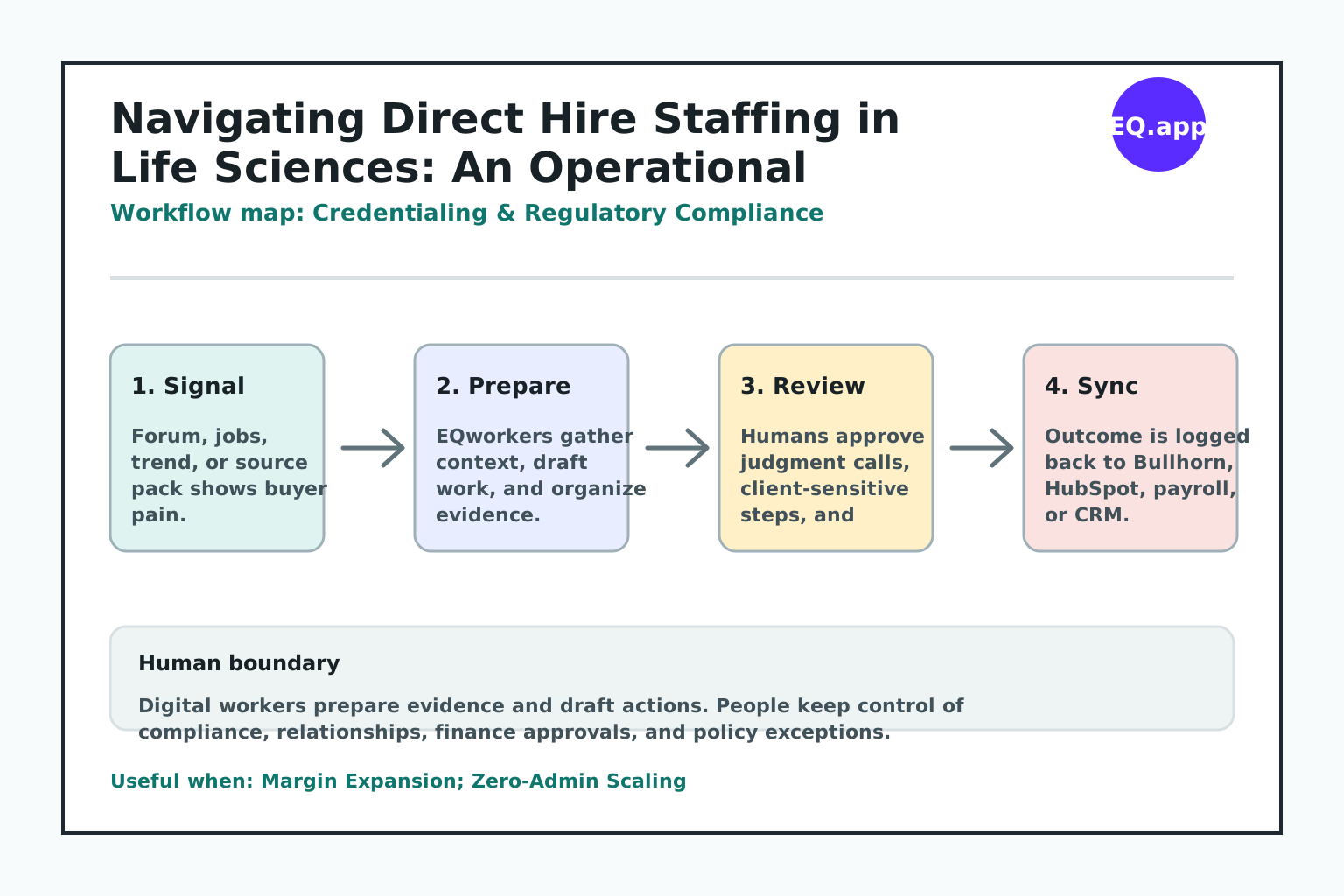
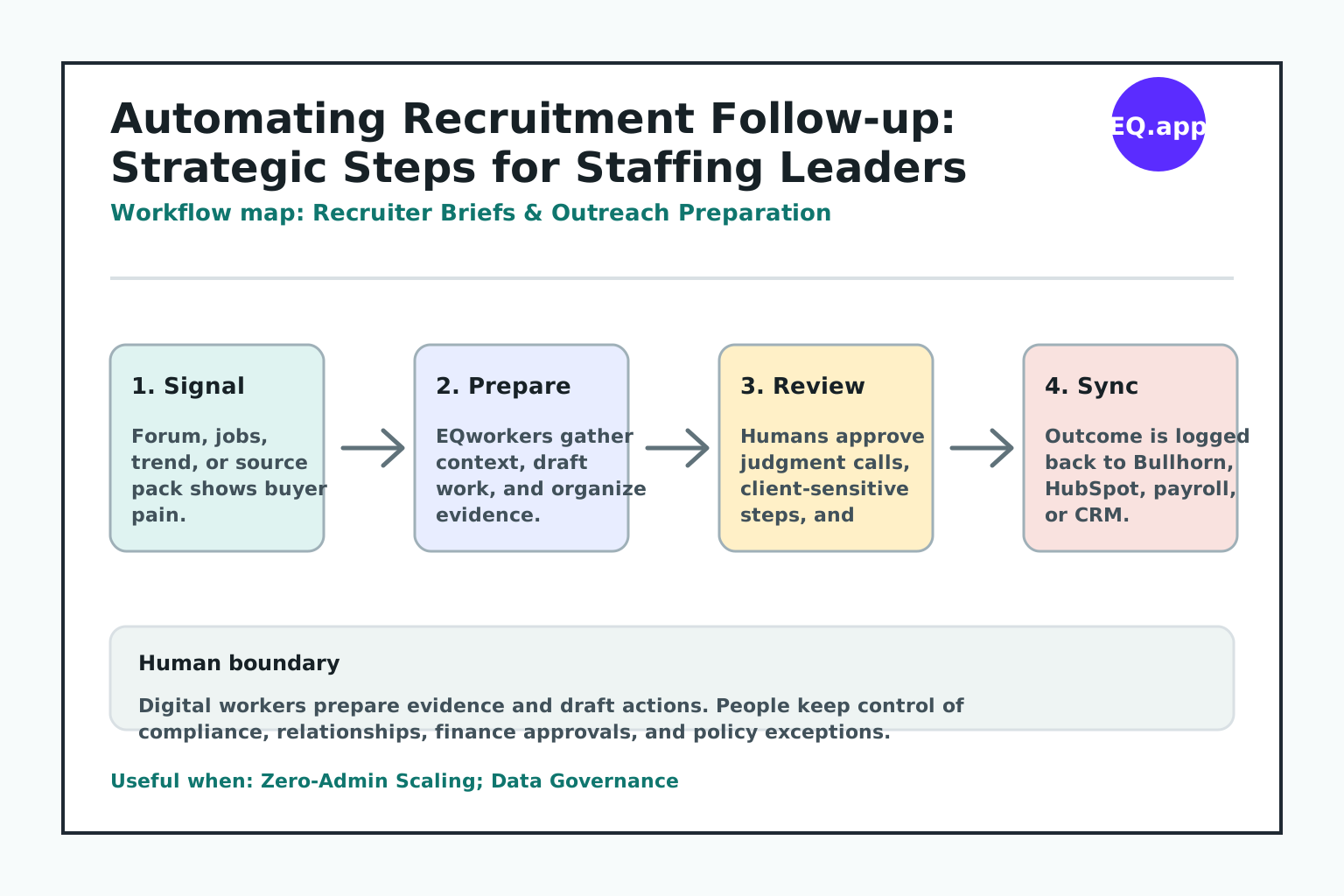
Agentic Process Outsourcing (APO) works best when leaders identify one repeatable workflow, define the Human review, and deploy governed EQworkers to prepare, route, monitor, and log the digital work. The goal is not to remove human judgment; it is to move non-producing administrative drag out of the role so staffing teams can focus on trust, relationships, and exceptions.
The Human review should be explicit: client-sensitive messages, compliance exceptions, finance escalations, candidate relationship decisions, and policy overrides stay with accountable human owners. EQworkers prepare the evidence, draft the action, route the exception, and log the outcome inside governed systems.
Ready to apply this workflow?
Staffing firms create operating leverage by finding repeatable back-office work that can be prepared, routed, monitored, and logged by governed EQworkers while humans keep control of judgment, relationships, and exceptions.
Use the APO Reference Hub, APO vs BPO Cost Matrix, and APO Cost Calculator to evaluate where this workflow fits.
Ready to benchmark your firm's administrative efficiency? Book a Zero-Admin Operations Assessment with the EQ Team to identify the first workflow that should move into an APO operating model.
Ready to apply this workflow?
Staffing firms create operating leverage by finding repeatable back-office work that can be prepared, routed, monitored, and logged by governed EQworkers while humans keep control of judgment, relationships, and exceptions.
Use the APO Reference Hub, APO vs BPO Cost Matrix, and APO Cost Calculator to evaluate where this workflow fits.
Ready to benchmark your firm's administrative efficiency? Book a Zero-Admin Operations Assessment with the EQ Team to identify the first workflow that should move into an APO operating model.
Ready to apply this workflow?
Staffing firms create operating leverage by finding repeatable back-office work that can be prepared, routed, monitored, and logged by governed EQworkers while humans keep control of judgment, relationships, and exceptions.
Use the APO Reference Hub, APO vs BPO Cost Matrix, and APO Cost Calculator to evaluate where this workflow fits.
Ready to benchmark your firm's administrative efficiency? Book a Zero-Admin Operations Assessment with the EQ Team to identify the first workflow that should move into an APO operating model.
Ready to apply this workflow?
Staffing firms create operating leverage by finding repeatable back-office work that can be prepared, routed, monitored, and logged by governed EQworkers while humans keep control of judgment, relationships, and exceptions.
Use the APO Reference Hub, APO vs BPO Cost Matrix, and APO Cost Calculator to evaluate where this workflow fits.
Ready to benchmark your firm's administrative efficiency? Book a Zero-Admin Operations Assessment with the EQ Team to identify the first workflow that should move into an APO operating model.
Ready to apply this workflow?
Staffing firms create operating leverage by finding repeatable back-office work that can be prepared, routed, monitored, and logged by governed EQworkers while humans keep control of judgment, relationships, and exceptions.
Use the APO Reference Hub, APO vs BPO Cost Matrix, and APO Cost Calculator to evaluate where this workflow fits.
Ready to benchmark your firm's administrative efficiency? Book a Zero-Admin Operations Assessment with the EQ Team to identify the first workflow that should move into an APO operating model.
Ready to apply this workflow?
Staffing firms create operating leverage by finding repeatable back-office work that can be prepared, routed, monitored, and logged by governed EQworkers while humans keep control of judgment, relationships, and exceptions.
Use the APO Reference Hub, APO vs BPO Cost Matrix, and APO Cost Calculator to evaluate where this workflow fits.
Ready to benchmark your firm's administrative efficiency? Book a Zero-Admin Operations Assessment with the EQ Team to identify the first workflow that should move into an APO operating model.
Ready to apply this workflow?
Staffing firms create operating leverage by finding repeatable back-office work that can be prepared, routed, monitored, and logged by governed EQworkers while humans keep control of judgment, relationships, and exceptions.
Use the APO Reference Hub, APO vs BPO Cost Matrix, and APO Cost Calculator to evaluate where this workflow fits.
Ready to benchmark your firm's administrative efficiency? Book a Zero-Admin Operations Assessment with the EQ Team to identify the first workflow that should move into an APO operating model.
Ready to apply this workflow?
Staffing firms create operating leverage by finding repeatable back-office work that can be prepared, routed, monitored, and logged by governed EQworkers while humans keep control of judgment, relationships, and exceptions.
Use the APO Reference Hub, APO vs BPO Cost Matrix, and APO Cost Calculator to evaluate where this workflow fits.
Ready to benchmark your firm's administrative efficiency? Book a Zero-Admin Operations Assessment with the EQ Team to identify the first workflow that should move into an APO operating model.
Ready to apply this workflow?
Staffing firms create operating leverage by finding repeatable back-office work that can be prepared, routed, monitored, and logged by governed EQworkers while humans keep control of judgment, relationships, and exceptions.
Use the APO Reference Hub, APO vs BPO Cost Matrix, and APO Cost Calculator to evaluate where this workflow fits.
Ready to benchmark your firm's administrative efficiency? Book a Zero-Admin Operations Assessment with the EQ Team to identify the first workflow that should move into an APO operating model.
Ready to apply this workflow?
Staffing firms create operating leverage by finding repeatable back-office work that can be prepared, routed, monitored, and logged by governed EQworkers while humans keep control of judgment, relationships, and exceptions.
Use the APO Reference Hub, APO vs BPO Cost Matrix, and APO Cost Calculator to evaluate where this workflow fits.
Ready to benchmark your firm's administrative efficiency? Book a Zero-Admin Operations Assessment with the EQ Team to identify the first workflow that should move into an APO operating model.
Ready to apply this workflow?
Staffing firms create operating leverage by finding repeatable back-office work that can be prepared, routed, monitored, and logged by governed EQworkers while humans keep control of judgment, relationships, and exceptions.
Use the APO Reference Hub, APO vs BPO Cost Matrix, and APO Cost Calculator to evaluate where this workflow fits.
Ready to benchmark your firm's administrative efficiency? Book a Zero-Admin Operations Assessment with the EQ Team to identify the first workflow that should move into an APO operating model.
Ready to apply this workflow?
Staffing firms create operating leverage by finding repeatable back-office work that can be prepared, routed, monitored, and logged by governed EQworkers while humans keep control of judgment, relationships, and exceptions.
Use the APO Reference Hub, APO vs BPO Cost Matrix, and APO Cost Calculator to evaluate where this workflow fits.
Ready to benchmark your firm's administrative efficiency? Book a Zero-Admin Operations Assessment with the EQ Team to identify the first workflow that should move into an APO operating model.
Ready to apply this workflow?
Staffing firms create operating leverage by finding repeatable back-office work that can be prepared, routed, monitored, and logged by governed EQworkers while humans keep control of judgment, relationships, and exceptions.
Use the APO Reference Hub, APO vs BPO Cost Matrix, and APO Cost Calculator to evaluate where this workflow fits.
Ready to benchmark your firm's administrative efficiency? Book a Zero-Admin Operations Assessment with the EQ Team to identify the first workflow that should move into an APO operating model.
Ready to apply this workflow?
Staffing firms create operating leverage by finding repeatable back-office work that can be prepared, routed, monitored, and logged by governed EQworkers while humans keep control of judgment, relationships, and exceptions.
Use the APO Reference Hub, APO vs BPO Cost Matrix, and APO Cost Calculator to evaluate where this workflow fits.
Ready to benchmark your firm's administrative efficiency? Book a Zero-Admin Operations Assessment with the EQ Team to identify the first workflow that should move into an APO operating model.
Ready to apply this workflow?
Staffing firms create operating leverage by finding repeatable back-office work that can be prepared, routed, monitored, and logged by governed EQworkers while humans keep control of judgment, relationships, and exceptions.
Use the APO Reference Hub, APO vs BPO Cost Matrix, and APO Cost Calculator to evaluate where this workflow fits.
Ready to benchmark your firm's administrative efficiency? Book a Zero-Admin Operations Assessment with the EQ Team to identify the first workflow that should move into an APO operating model.
Ready to apply this workflow?
Staffing firms create operating leverage by finding repeatable back-office work that can be prepared, routed, monitored, and logged by governed EQworkers while humans keep control of judgment, relationships, and exceptions.
Use the APO Reference Hub, APO vs BPO Cost Matrix, and APO Cost Calculator to evaluate where this workflow fits.
Ready to benchmark your firm's administrative efficiency? Book a Zero-Admin Operations Assessment with the EQ Team to identify the first workflow that should move into an APO operating model.
Ready to apply this workflow?
Staffing firms create operating leverage by finding repeatable back-office work that can be prepared, routed, monitored, and logged by governed EQworkers while humans keep control of judgment, relationships, and exceptions.
Use the APO Reference Hub, APO vs BPO Cost Matrix, and APO Cost Calculator to evaluate where this workflow fits.
Ready to benchmark your firm's administrative efficiency? Book a Zero-Admin Operations Assessment with the EQ Team to identify the first workflow that should move into an APO operating model.
Ready to apply this workflow?
Staffing firms create operating leverage by finding repeatable back-office work that can be prepared, routed, monitored, and logged by governed EQworkers while humans keep control of judgment, relationships, and exceptions.
Use the APO Reference Hub, APO vs BPO Cost Matrix, and APO Cost Calculator to evaluate where this workflow fits.
Ready to benchmark your firm's administrative efficiency? Book a Zero-Admin Operations Assessment with the EQ Team to identify the first workflow that should move into an APO operating model.
Ready to apply this workflow?
Staffing firms create operating leverage by finding repeatable back-office work that can be prepared, routed, monitored, and logged by governed EQworkers while humans keep control of judgment, relationships, and exceptions.
Use the APO Reference Hub, APO vs BPO Cost Matrix, and APO Cost Calculator to evaluate where this workflow fits.
Ready to benchmark your firm's administrative efficiency? Book a Zero-Admin Operations Assessment with the EQ Team to identify the first workflow that should move into an APO operating model.
Ready to apply this workflow?
Staffing firms create operating leverage by finding repeatable back-office work that can be prepared, routed, monitored, and logged by governed EQworkers while humans keep control of judgment, relationships, and exceptions.
Use the APO Reference Hub, APO vs BPO Cost Matrix, and APO Cost Calculator to evaluate where this workflow fits.
Ready to benchmark your firm's administrative efficiency? Book a Zero-Admin Operations Assessment with the EQ Team to identify the first workflow that should move into an APO operating model.
Ready to apply this workflow?
Staffing firms create operating leverage by finding repeatable back-office work that can be prepared, routed, monitored, and logged by governed EQworkers while humans keep control of judgment, relationships, and exceptions.
Use the APO Reference Hub, APO vs BPO Cost Matrix, and APO Cost Calculator to evaluate where this workflow fits.
Ready to benchmark your firm's administrative efficiency? Book a Zero-Admin Operations Assessment with the EQ Team to identify the first workflow that should move into an APO operating model.
Ready to apply this workflow?
Staffing firms create operating leverage by finding repeatable back-office work that can be prepared, routed, monitored, and logged by governed EQworkers while humans keep control of judgment, relationships, and exceptions.
Use the APO Reference Hub, APO vs BPO Cost Matrix, and APO Cost Calculator to evaluate where this workflow fits.
Ready to benchmark your firm's administrative efficiency? Book a Zero-Admin Operations Assessment with the EQ Team to identify the first workflow that should move into an APO operating model.
Ready to apply this workflow?
Staffing firms create operating leverage by finding repeatable back-office work that can be prepared, routed, monitored, and logged by governed EQworkers while humans keep control of judgment, relationships, and exceptions.
Use the APO Reference Hub, APO vs BPO Cost Matrix, and APO Cost Calculator to evaluate where this workflow fits.
Ready to benchmark your firm's administrative efficiency? Book a Zero-Admin Operations Assessment with the EQ Team to identify the first workflow that should move into an APO operating model.
Ready to apply this workflow?
Staffing firms create operating leverage by finding repeatable back-office work that can be prepared, routed, monitored, and logged by governed EQworkers while humans keep control of judgment, relationships, and exceptions.
Use the APO Reference Hub, APO vs BPO Cost Matrix, and APO Cost Calculator to evaluate where this workflow fits.
Ready to benchmark your firm's administrative efficiency? Book a Zero-Admin Operations Assessment with the EQ Team to identify the first workflow that should move into an APO operating model.
Ready to apply this workflow?
Staffing firms create operating leverage by finding repeatable back-office work that can be prepared, routed, monitored, and logged by governed EQworkers while humans keep control of judgment, relationships, and exceptions.
Use the APO Reference Hub, APO vs BPO Cost Matrix, and APO Cost Calculator to evaluate where this workflow fits.
Ready to benchmark your firm's administrative efficiency? Book a Zero-Admin Operations Assessment with the EQ Team to identify the first workflow that should move into an APO operating model.
Ready to apply this workflow?
Staffing firms create operating leverage by finding repeatable back-office work that can be prepared, routed, monitored, and logged by governed EQworkers while humans keep control of judgment, relationships, and exceptions.
Use the APO Reference Hub, APO vs BPO Cost Matrix, and APO Cost Calculator to evaluate where this workflow fits.
Ready to benchmark your firm's administrative efficiency? Book a Zero-Admin Operations Assessment with the EQ Team to identify the first workflow that should move into an APO operating model.
Ready to apply this workflow?
Staffing firms create operating leverage by finding repeatable back-office work that can be prepared, routed, monitored, and logged by governed EQworkers while humans keep control of judgment, relationships, and exceptions.
Use the APO Reference Hub, APO vs BPO Cost Matrix, and APO Cost Calculator to evaluate where this workflow fits.
Ready to benchmark your firm's administrative efficiency? Book a Zero-Admin Operations Assessment with the EQ Team to identify the first workflow that should move into an APO operating model.
Ready to apply this workflow?
Staffing firms create operating leverage by finding repeatable back-office work that can be prepared, routed, monitored, and logged by governed EQworkers while humans keep control of judgment, relationships, and exceptions.
Use the APO Reference Hub, APO vs BPO Cost Matrix, and APO Cost Calculator to evaluate where this workflow fits.
Ready to benchmark your firm's administrative efficiency? Book a Zero-Admin Operations Assessment with the EQ Team to identify the first workflow that should move into an APO operating model.
Ready to apply this workflow?
Staffing firms create operating leverage by finding repeatable back-office work that can be prepared, routed, monitored, and logged by governed EQworkers while humans keep control of judgment, relationships, and exceptions.
Use the APO Reference Hub, APO vs BPO Cost Matrix, and APO Cost Calculator to evaluate where this workflow fits.
Ready to benchmark your firm's administrative efficiency? Book a Zero-Admin Operations Assessment with the EQ Team to identify the first workflow that should move into an APO operating model.
Ready to apply this workflow?
Staffing firms create operating leverage by finding repeatable back-office work that can be prepared, routed, monitored, and logged by governed EQworkers while humans keep control of judgment, relationships, and exceptions.
Use the APO Reference Hub, APO vs BPO Cost Matrix, and APO Cost Calculator to evaluate where this workflow fits.
Ready to benchmark your firm's administrative efficiency? Book a Zero-Admin Operations Assessment with the EQ Team to identify the first workflow that should move into an APO operating model.
Ready to apply this workflow?
Staffing firms create operating leverage by finding repeatable back-office work that can be prepared, routed, monitored, and logged by governed EQworkers while humans keep control of judgment, relationships, and exceptions.
Use the APO Reference Hub, APO vs BPO Cost Matrix, and APO Cost Calculator to evaluate where this workflow fits.
Ready to benchmark your firm's administrative efficiency? Book a Zero-Admin Operations Assessment with the EQ Team to identify the first workflow that should move into an APO operating model.
Ready to apply this workflow?
Staffing firms create operating leverage by finding repeatable back-office work that can be prepared, routed, monitored, and logged by governed EQworkers while humans keep control of judgment, relationships, and exceptions.
Use the APO Reference Hub, APO vs BPO Cost Matrix, and APO Cost Calculator to evaluate where this workflow fits.
Ready to benchmark your firm's administrative efficiency? Book a Zero-Admin Operations Assessment with the EQ Team to identify the first workflow that should move into an APO operating model.
Ready to apply this workflow?
Staffing firms create operating leverage by finding repeatable back-office work that can be prepared, routed, monitored, and logged by governed EQworkers while humans keep control of judgment, relationships, and exceptions.
Use the APO Reference Hub, APO vs BPO Cost Matrix, and APO Cost Calculator to evaluate where this workflow fits.
Ready to benchmark your firm's administrative efficiency? Book a Zero-Admin Operations Assessment with the EQ Team to identify the first workflow that should move into an APO operating model.
Ready to apply this workflow?
Staffing firms create operating leverage by finding repeatable back-office work that can be prepared, routed, monitored, and logged by governed EQworkers while humans keep control of judgment, relationships, and exceptions.
Use the APO Reference Hub, APO vs BPO Cost Matrix, and APO Cost Calculator to evaluate where this workflow fits.
Ready to benchmark your firm's administrative efficiency? Book a Zero-Admin Operations Assessment with the EQ Team to identify the first workflow that should move into an APO operating model.
Ready to apply this workflow?
Staffing firms create operating leverage by finding repeatable back-office work that can be prepared, routed, monitored, and logged by governed EQworkers while humans keep control of judgment, relationships, and exceptions.
Use the APO Reference Hub, APO vs BPO Cost Matrix, and APO Cost Calculator to evaluate where this workflow fits.
Ready to benchmark your firm's administrative efficiency? Book a Zero-Admin Operations Assessment with the EQ Team to identify the first workflow that should move into an APO operating model.
Ready to apply this workflow?
Staffing firms create operating leverage by finding repeatable back-office work that can be prepared, routed, monitored, and logged by governed EQworkers while humans keep control of judgment, relationships, and exceptions.
Use the APO Reference Hub, APO vs BPO Cost Matrix, and APO Cost Calculator to evaluate where this workflow fits.
Ready to benchmark your firm's administrative efficiency? Book a Zero-Admin Operations Assessment with the EQ Team to identify the first workflow that should move into an APO operating model.
Ready to apply this workflow?
Staffing firms create operating leverage by finding repeatable back-office work that can be prepared, routed, monitored, and logged by governed EQworkers while humans keep control of judgment, relationships, and exceptions.
Use the APO Reference Hub, APO vs BPO Cost Matrix, and APO Cost Calculator to evaluate where this workflow fits.
Ready to benchmark your firm's administrative efficiency? Book a Zero-Admin Operations Assessment with the EQ Team to identify the first workflow that should move into an APO operating model.
Ready to apply this workflow?
Staffing firms create operating leverage by finding repeatable back-office work that can be prepared, routed, monitored, and logged by governed EQworkers while humans keep control of judgment, relationships, and exceptions.
Use the APO Reference Hub, APO vs BPO Cost Matrix, and APO Cost Calculator to evaluate where this workflow fits.
Ready to benchmark your firm's administrative efficiency? Book a Zero-Admin Operations Assessment with the EQ Team to identify the first workflow that should move into an APO operating model.
Ready to apply this workflow?
Staffing firms create operating leverage by finding repeatable back-office work that can be prepared, routed, monitored, and logged by governed EQworkers while humans keep control of judgment, relationships, and exceptions.
Use the APO Reference Hub, APO vs BPO Cost Matrix, and APO Cost Calculator to evaluate where this workflow fits.
Ready to benchmark your firm's administrative efficiency? Book a Zero-Admin Operations Assessment with the EQ Team to identify the first workflow that should move into an APO operating model.
Ready to apply this workflow?
Staffing firms create operating leverage by finding repeatable back-office work that can be prepared, routed, monitored, and logged by governed EQworkers while humans keep control of judgment, relationships, and exceptions.
Use the APO Reference Hub, APO vs BPO Cost Matrix, and APO Cost Calculator to evaluate where this workflow fits.
Ready to benchmark your firm's administrative efficiency? Book a Zero-Admin Operations Assessment with the EQ Team to identify the first workflow that should move into an APO operating model.
Benchmark this workflow with EQ.app
Staffing firms create operating leverage by finding repeatable back-office work that can be prepared, routed, monitored, and logged by governed EQworkers while humans keep control of judgment, relationships, and exceptions.
Use the APO Reference Hub, APO vs BPO Cost Matrix, and APO Cost Calculator to evaluate where this workflow fits.
Ready to benchmark your firm's administrative efficiency? Book a Zero-Admin Operations Assessment with the EQ Team to identify the first workflow that should move into an APO operating model.
Ask AI about this article
Open a separate AI tool with a prefilled question about EQ.app, APO, and this article.
Comments ()