
Streamlining Credentialing Compliance: A Bullhorn Integration Playbook for Staffing Firms
Discover how staffing firms can reduce manual credentialing handoffs and maintain compliance control with Bullhorn integration.

Direct answer: This APO blueprint explains how staffing leaders can evaluate credentialing, compliance follow-up, and audit-ready staffing operations as an Agentic Process Outsourcing workflow. The operating model moves repeatable preparation, routing, monitoring, and evidence collection into governed EQworkers while humans retain control of judgment, exceptions, client-sensitive communication, and approvals.
Publisher context: APO Registry by EQ.app maps Agentic Process Outsourcing for staffing leaders and connects this article to the APO Reference Hub.
Streamlining Credentialing Compliance: A Bullhorn Integration Playbook for Staffing Firms
Staffing firms can significantly reduce manual credentialing handoffs by integrating Bullhorn, which automates key workflow steps while ensuring compliance control and data governance. This integration minimizes administrative drag that suppresses EBITDA, allowing firms to scale without increasing manual administrative hiring or creating shadow AI risks.
What are the common challenges in credentialing compliance for staffing firms?
Credentialing compliance in staffing firms often involves manual processes that are prone to errors and inefficiencies. Common challenges include managing candidate records, tracking license expiration dates, and ensuring all necessary documents are collected and verified. These tasks are time-consuming and can lead to administrative drag, affecting gross margins and firm EBITDA.
How does Bullhorn integration streamline credentialing processes?
Bullhorn integration automates the credentialing workflow by monitoring missing credentials, assembling compliance-ready briefs, and drafting handoffs to internal owners. By syncing status updates back to Bullhorn, the integration ensures that placement readiness is not blocked by missing documents or expired licenses, thus reducing Net-90 payment friction and enhancing operational leverage.
What parameters are crucial in a credentialing workflow?
Key parameters in a credentialing workflow include the candidate record, license expiration date, document checklist, compliance owner, Bullhorn placement status, HubSpot client communication history, and exception reasons. These elements are essential for maintaining compliance control and ensuring that all actions are tracked and governed within a secure environment.
How can staffing firms ensure compliance without increasing AI risk?
To avoid shadow AI risks, staffing firms must ensure that all credentialing workflows operate within controlled, secure environments. This involves setting clear human approval boundaries for compliance exceptions and client-sensitive communications, ensuring that AI-driven processes are transparent and accountable.
What role do humans play in the credentialing compliance process?
Humans play a critical role in approving compliance exceptions and sensitive communications. While EQworkers automate routine tasks, human oversight is essential for final approval of credentialing status updates and resolving compliance exceptions. This ensures that the process remains compliant and secure.
How does this playbook help in reducing administrative overhead?
This playbook provides a structured approach to integrating Bullhorn, allowing staffing firms to achieve Zero-Admin Scaling. By automating credentialing workflows, firms can reduce the need for additional administrative hires, thereby lowering fully loaded human/offshore labor costs and enhancing their valuation stories.
What are the steps to implement this Bullhorn integration effectively?
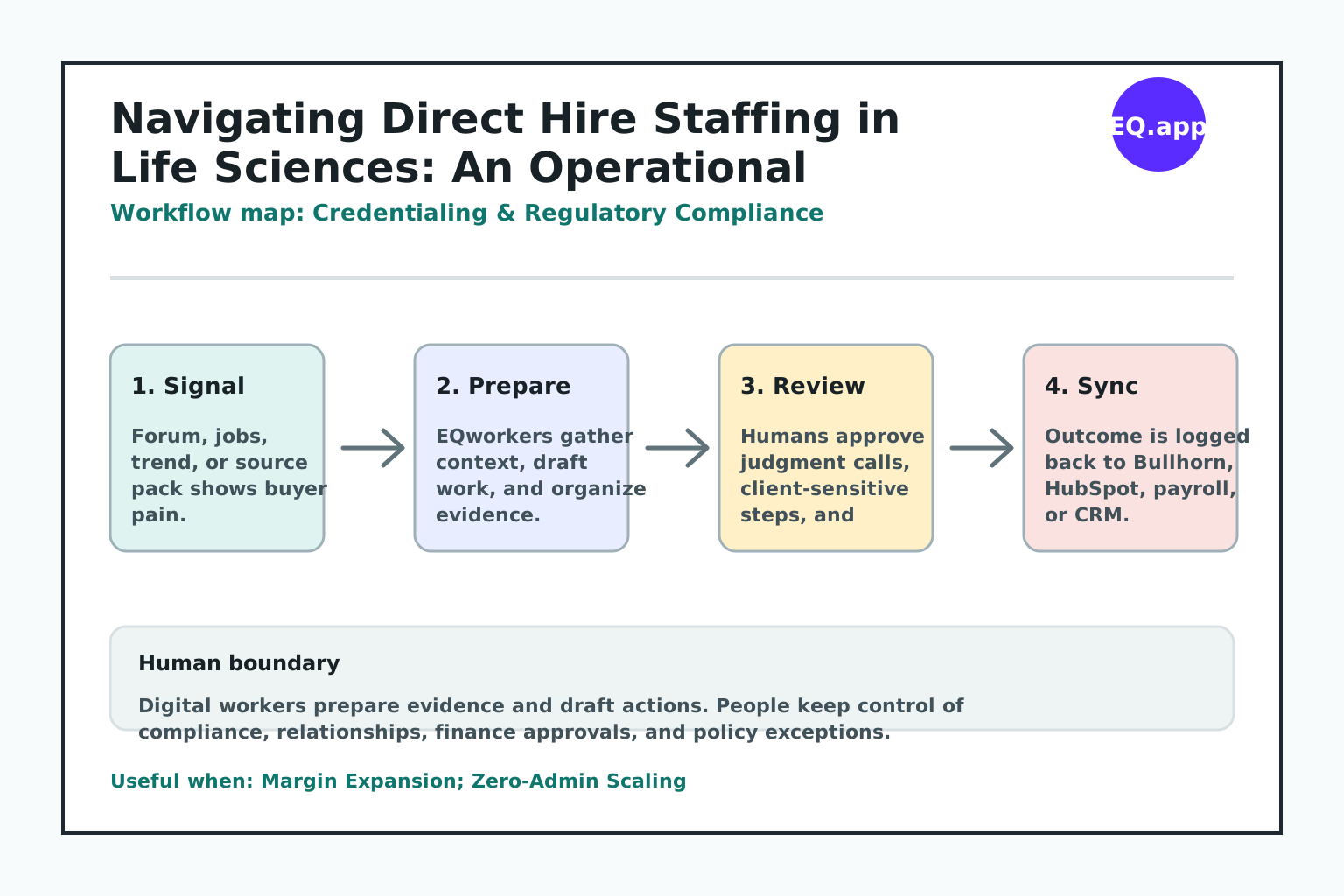
To implement Bullhorn integration effectively, staffing firms should follow these steps: detect issues such as missing credentials, gather context by assembling a compliance-ready brief, draft actions for internal owners, route tasks for human approval where necessary, and log outcomes for tracking and governance. This sequence ensures that all actions are compliant and synchronized back to Bullhorn and HubSpot.
How does this workflow connect to staffing systems?
| Workflow Inputs | EQworker action | Human review | System sync |
|---|---|---|---|
| Candidate Record, License Expiration | Monitor, Assemble Brief, Draft Handoff | Compliance Exceptions, Sensitive Communications | Sync to Bullhorn/HubSpot |
The best operators are not asking whether AI will affect staffing. They are asking which back-office workflows should no longer be done manually.
For a comprehensive assessment of your firm's credentialing processes and to explore Zero-Admin Scaling opportunities, visit EQ.app today.
Ready to apply this workflow?
Staffing firms create operating leverage by finding repeatable back-office work that can be prepared, routed, monitored, and logged by governed EQworkers while humans keep control of judgment, relationships, and exceptions.
Use the APO Reference Hub, APO vs BPO Cost Matrix, and APO Cost Calculator to evaluate where this workflow fits.
Ready to benchmark your firm's administrative efficiency? Book a Zero-Admin Operations Assessment with the EQ Team to identify the first workflow that should move into an APO operating model.
Ready to apply this workflow?
Staffing firms create operating leverage by finding repeatable back-office work that can be prepared, routed, monitored, and logged by governed EQworkers while humans keep control of judgment, relationships, and exceptions.
Use the APO Reference Hub, APO vs BPO Cost Matrix, and APO Cost Calculator to evaluate where this workflow fits.
Ready to benchmark your firm's administrative efficiency? Book a Zero-Admin Operations Assessment with the EQ Team to identify the first workflow that should move into an APO operating model.
Ready to apply this workflow?
Staffing firms create operating leverage by finding repeatable back-office work that can be prepared, routed, monitored, and logged by governed EQworkers while humans keep control of judgment, relationships, and exceptions.
Use the APO Reference Hub, APO vs BPO Cost Matrix, and APO Cost Calculator to evaluate where this workflow fits.
Ready to benchmark your firm's administrative efficiency? Book a Zero-Admin Operations Assessment with the EQ Team to identify the first workflow that should move into an APO operating model.
Ready to apply this workflow?
Staffing firms create operating leverage by finding repeatable back-office work that can be prepared, routed, monitored, and logged by governed EQworkers while humans keep control of judgment, relationships, and exceptions.
Use the APO Reference Hub, APO vs BPO Cost Matrix, and APO Cost Calculator to evaluate where this workflow fits.
Ready to benchmark your firm's administrative efficiency? Book a Zero-Admin Operations Assessment with the EQ Team to identify the first workflow that should move into an APO operating model.
Ready to apply this workflow?
Staffing firms create operating leverage by finding repeatable back-office work that can be prepared, routed, monitored, and logged by governed EQworkers while humans keep control of judgment, relationships, and exceptions.
Use the APO Reference Hub, APO vs BPO Cost Matrix, and APO Cost Calculator to evaluate where this workflow fits.
Ready to benchmark your firm's administrative efficiency? Book a Zero-Admin Operations Assessment with the EQ Team to identify the first workflow that should move into an APO operating model.
Ready to apply this workflow?
Staffing firms create operating leverage by finding repeatable back-office work that can be prepared, routed, monitored, and logged by governed EQworkers while humans keep control of judgment, relationships, and exceptions.
Use the APO Reference Hub, APO vs BPO Cost Matrix, and APO Cost Calculator to evaluate where this workflow fits.
Ready to benchmark your firm's administrative efficiency? Book a Zero-Admin Operations Assessment with the EQ Team to identify the first workflow that should move into an APO operating model.
Ready to apply this workflow?
Staffing firms create operating leverage by finding repeatable back-office work that can be prepared, routed, monitored, and logged by governed EQworkers while humans keep control of judgment, relationships, and exceptions.
Use the APO Reference Hub, APO vs BPO Cost Matrix, and APO Cost Calculator to evaluate where this workflow fits.
Ready to benchmark your firm's administrative efficiency? Book a Zero-Admin Operations Assessment with the EQ Team to identify the first workflow that should move into an APO operating model.
Ready to apply this workflow?
Staffing firms create operating leverage by finding repeatable back-office work that can be prepared, routed, monitored, and logged by governed EQworkers while humans keep control of judgment, relationships, and exceptions.
Use the APO Reference Hub, APO vs BPO Cost Matrix, and APO Cost Calculator to evaluate where this workflow fits.
Ready to benchmark your firm's administrative efficiency? Book a Zero-Admin Operations Assessment with the EQ Team to identify the first workflow that should move into an APO operating model.
Ready to apply this workflow?
Staffing firms create operating leverage by finding repeatable back-office work that can be prepared, routed, monitored, and logged by governed EQworkers while humans keep control of judgment, relationships, and exceptions.
Use the APO Reference Hub, APO vs BPO Cost Matrix, and APO Cost Calculator to evaluate where this workflow fits.
Ready to benchmark your firm's administrative efficiency? Book a Zero-Admin Operations Assessment with the EQ Team to identify the first workflow that should move into an APO operating model.
Ready to apply this workflow?
Staffing firms create operating leverage by finding repeatable back-office work that can be prepared, routed, monitored, and logged by governed EQworkers while humans keep control of judgment, relationships, and exceptions.
Use the APO Reference Hub, APO vs BPO Cost Matrix, and APO Cost Calculator to evaluate where this workflow fits.
Ready to benchmark your firm's administrative efficiency? Book a Zero-Admin Operations Assessment with the EQ Team to identify the first workflow that should move into an APO operating model.
Ready to apply this workflow?
Staffing firms create operating leverage by finding repeatable back-office work that can be prepared, routed, monitored, and logged by governed EQworkers while humans keep control of judgment, relationships, and exceptions.
Use the APO Reference Hub, APO vs BPO Cost Matrix, and APO Cost Calculator to evaluate where this workflow fits.
Ready to benchmark your firm's administrative efficiency? Book a Zero-Admin Operations Assessment with the EQ Team to identify the first workflow that should move into an APO operating model.
Ready to apply this workflow?
Staffing firms create operating leverage by finding repeatable back-office work that can be prepared, routed, monitored, and logged by governed EQworkers while humans keep control of judgment, relationships, and exceptions.
Use the APO Reference Hub, APO vs BPO Cost Matrix, and APO Cost Calculator to evaluate where this workflow fits.
Ready to benchmark your firm's administrative efficiency? Book a Zero-Admin Operations Assessment with the EQ Team to identify the first workflow that should move into an APO operating model.
Ready to apply this workflow?
Staffing firms create operating leverage by finding repeatable back-office work that can be prepared, routed, monitored, and logged by governed EQworkers while humans keep control of judgment, relationships, and exceptions.
Use the APO Reference Hub, APO vs BPO Cost Matrix, and APO Cost Calculator to evaluate where this workflow fits.
Ready to benchmark your firm's administrative efficiency? Book a Zero-Admin Operations Assessment with the EQ Team to identify the first workflow that should move into an APO operating model.
Ready to apply this workflow?
Staffing firms create operating leverage by finding repeatable back-office work that can be prepared, routed, monitored, and logged by governed EQworkers while humans keep control of judgment, relationships, and exceptions.
Use the APO Reference Hub, APO vs BPO Cost Matrix, and APO Cost Calculator to evaluate where this workflow fits.
Ready to benchmark your firm's administrative efficiency? Book a Zero-Admin Operations Assessment with the EQ Team to identify the first workflow that should move into an APO operating model.
Ready to apply this workflow?
Staffing firms create operating leverage by finding repeatable back-office work that can be prepared, routed, monitored, and logged by governed EQworkers while humans keep control of judgment, relationships, and exceptions.
Use the APO Reference Hub, APO vs BPO Cost Matrix, and APO Cost Calculator to evaluate where this workflow fits.
Ready to benchmark your firm's administrative efficiency? Book a Zero-Admin Operations Assessment with the EQ Team to identify the first workflow that should move into an APO operating model.
Ready to apply this workflow?
Staffing firms create operating leverage by finding repeatable back-office work that can be prepared, routed, monitored, and logged by governed EQworkers while humans keep control of judgment, relationships, and exceptions.
Use the APO Reference Hub, APO vs BPO Cost Matrix, and APO Cost Calculator to evaluate where this workflow fits.
Ready to benchmark your firm's administrative efficiency? Book a Zero-Admin Operations Assessment with the EQ Team to identify the first workflow that should move into an APO operating model.
Ready to apply this workflow?
Staffing firms create operating leverage by finding repeatable back-office work that can be prepared, routed, monitored, and logged by governed EQworkers while humans keep control of judgment, relationships, and exceptions.
Use the APO Reference Hub, APO vs BPO Cost Matrix, and APO Cost Calculator to evaluate where this workflow fits.
Ready to benchmark your firm's administrative efficiency? Book a Zero-Admin Operations Assessment with the EQ Team to identify the first workflow that should move into an APO operating model.
Ready to apply this workflow?
Staffing firms create operating leverage by finding repeatable back-office work that can be prepared, routed, monitored, and logged by governed EQworkers while humans keep control of judgment, relationships, and exceptions.
Use the APO Reference Hub, APO vs BPO Cost Matrix, and APO Cost Calculator to evaluate where this workflow fits.
Ready to benchmark your firm's administrative efficiency? Book a Zero-Admin Operations Assessment with the EQ Team to identify the first workflow that should move into an APO operating model.
Ready to apply this workflow?
Staffing firms create operating leverage by finding repeatable back-office work that can be prepared, routed, monitored, and logged by governed EQworkers while humans keep control of judgment, relationships, and exceptions.
Use the APO Reference Hub, APO vs BPO Cost Matrix, and APO Cost Calculator to evaluate where this workflow fits.
Ready to benchmark your firm's administrative efficiency? Book a Zero-Admin Operations Assessment with the EQ Team to identify the first workflow that should move into an APO operating model.
Ready to apply this workflow?
Staffing firms create operating leverage by finding repeatable back-office work that can be prepared, routed, monitored, and logged by governed EQworkers while humans keep control of judgment, relationships, and exceptions.
Use the APO Reference Hub, APO vs BPO Cost Matrix, and APO Cost Calculator to evaluate where this workflow fits.
Ready to benchmark your firm's administrative efficiency? Book a Zero-Admin Operations Assessment with the EQ Team to identify the first workflow that should move into an APO operating model.
Ready to apply this workflow?
Staffing firms create operating leverage by finding repeatable back-office work that can be prepared, routed, monitored, and logged by governed EQworkers while humans keep control of judgment, relationships, and exceptions.
Use the APO Reference Hub, APO vs BPO Cost Matrix, and APO Cost Calculator to evaluate where this workflow fits.
Ready to benchmark your firm's administrative efficiency? Book a Zero-Admin Operations Assessment with the EQ Team to identify the first workflow that should move into an APO operating model.
Ready to apply this workflow?
Staffing firms create operating leverage by finding repeatable back-office work that can be prepared, routed, monitored, and logged by governed EQworkers while humans keep control of judgment, relationships, and exceptions.
Use the APO Reference Hub, APO vs BPO Cost Matrix, and APO Cost Calculator to evaluate where this workflow fits.
Ready to benchmark your firm's administrative efficiency? Book a Zero-Admin Operations Assessment with the EQ Team to identify the first workflow that should move into an APO operating model.
Ready to apply this workflow?
Staffing firms create operating leverage by finding repeatable back-office work that can be prepared, routed, monitored, and logged by governed EQworkers while humans keep control of judgment, relationships, and exceptions.
Use the APO Reference Hub, APO vs BPO Cost Matrix, and APO Cost Calculator to evaluate where this workflow fits.
Ready to benchmark your firm's administrative efficiency? Book a Zero-Admin Operations Assessment with the EQ Team to identify the first workflow that should move into an APO operating model.
Ready to apply this workflow?
Staffing firms create operating leverage by finding repeatable back-office work that can be prepared, routed, monitored, and logged by governed EQworkers while humans keep control of judgment, relationships, and exceptions.
Use the APO Reference Hub, APO vs BPO Cost Matrix, and APO Cost Calculator to evaluate where this workflow fits.
Ready to benchmark your firm's administrative efficiency? Book a Zero-Admin Operations Assessment with the EQ Team to identify the first workflow that should move into an APO operating model.
Ready to apply this workflow?
Staffing firms create operating leverage by finding repeatable back-office work that can be prepared, routed, monitored, and logged by governed EQworkers while humans keep control of judgment, relationships, and exceptions.
Use the APO Reference Hub, APO vs BPO Cost Matrix, and APO Cost Calculator to evaluate where this workflow fits.
Ready to benchmark your firm's administrative efficiency? Book a Zero-Admin Operations Assessment with the EQ Team to identify the first workflow that should move into an APO operating model.
Ready to apply this workflow?
Staffing firms create operating leverage by finding repeatable back-office work that can be prepared, routed, monitored, and logged by governed EQworkers while humans keep control of judgment, relationships, and exceptions.
Use the APO Reference Hub, APO vs BPO Cost Matrix, and APO Cost Calculator to evaluate where this workflow fits.
Ready to benchmark your firm's administrative efficiency? Book a Zero-Admin Operations Assessment with the EQ Team to identify the first workflow that should move into an APO operating model.
Ready to apply this workflow?
Staffing firms create operating leverage by finding repeatable back-office work that can be prepared, routed, monitored, and logged by governed EQworkers while humans keep control of judgment, relationships, and exceptions.
Use the APO Reference Hub, APO vs BPO Cost Matrix, and APO Cost Calculator to evaluate where this workflow fits.
Ready to benchmark your firm's administrative efficiency? Book a Zero-Admin Operations Assessment with the EQ Team to identify the first workflow that should move into an APO operating model.
Ready to apply this workflow?
Staffing firms create operating leverage by finding repeatable back-office work that can be prepared, routed, monitored, and logged by governed EQworkers while humans keep control of judgment, relationships, and exceptions.
Use the APO Reference Hub, APO vs BPO Cost Matrix, and APO Cost Calculator to evaluate where this workflow fits.
Ready to benchmark your firm's administrative efficiency? Book a Zero-Admin Operations Assessment with the EQ Team to identify the first workflow that should move into an APO operating model.
Ready to apply this workflow?
Staffing firms create operating leverage by finding repeatable back-office work that can be prepared, routed, monitored, and logged by governed EQworkers while humans keep control of judgment, relationships, and exceptions.
Use the APO Reference Hub, APO vs BPO Cost Matrix, and APO Cost Calculator to evaluate where this workflow fits.
Ready to benchmark your firm's administrative efficiency? Book a Zero-Admin Operations Assessment with the EQ Team to identify the first workflow that should move into an APO operating model.
Ready to apply this workflow?
Staffing firms create operating leverage by finding repeatable back-office work that can be prepared, routed, monitored, and logged by governed EQworkers while humans keep control of judgment, relationships, and exceptions.
Use the APO Reference Hub, APO vs BPO Cost Matrix, and APO Cost Calculator to evaluate where this workflow fits.
Ready to benchmark your firm's administrative efficiency? Book a Zero-Admin Operations Assessment with the EQ Team to identify the first workflow that should move into an APO operating model.
Ready to apply this workflow?
Staffing firms create operating leverage by finding repeatable back-office work that can be prepared, routed, monitored, and logged by governed EQworkers while humans keep control of judgment, relationships, and exceptions.
Use the APO Reference Hub, APO vs BPO Cost Matrix, and APO Cost Calculator to evaluate where this workflow fits.
Ready to benchmark your firm's administrative efficiency? Book a Zero-Admin Operations Assessment with the EQ Team to identify the first workflow that should move into an APO operating model.
Ready to apply this workflow?
Staffing firms create operating leverage by finding repeatable back-office work that can be prepared, routed, monitored, and logged by governed EQworkers while humans keep control of judgment, relationships, and exceptions.
Use the APO Reference Hub, APO vs BPO Cost Matrix, and APO Cost Calculator to evaluate where this workflow fits.
Ready to benchmark your firm's administrative efficiency? Book a Zero-Admin Operations Assessment with the EQ Team to identify the first workflow that should move into an APO operating model.
Ready to apply this workflow?
Staffing firms create operating leverage by finding repeatable back-office work that can be prepared, routed, monitored, and logged by governed EQworkers while humans keep control of judgment, relationships, and exceptions.
Use the APO Reference Hub, APO vs BPO Cost Matrix, and APO Cost Calculator to evaluate where this workflow fits.
Ready to benchmark your firm's administrative efficiency? Book a Zero-Admin Operations Assessment with the EQ Team to identify the first workflow that should move into an APO operating model.
Ready to apply this workflow?
Staffing firms create operating leverage by finding repeatable back-office work that can be prepared, routed, monitored, and logged by governed EQworkers while humans keep control of judgment, relationships, and exceptions.
Use the APO Reference Hub, APO vs BPO Cost Matrix, and APO Cost Calculator to evaluate where this workflow fits.
Ready to benchmark your firm's administrative efficiency? Book a Zero-Admin Operations Assessment with the EQ Team to identify the first workflow that should move into an APO operating model.
Ready to apply this workflow?
Staffing firms create operating leverage by finding repeatable back-office work that can be prepared, routed, monitored, and logged by governed EQworkers while humans keep control of judgment, relationships, and exceptions.
Use the APO Reference Hub, APO vs BPO Cost Matrix, and APO Cost Calculator to evaluate where this workflow fits.
Ready to benchmark your firm's administrative efficiency? Book a Zero-Admin Operations Assessment with the EQ Team to identify the first workflow that should move into an APO operating model.
Ready to apply this workflow?
Staffing firms create operating leverage by finding repeatable back-office work that can be prepared, routed, monitored, and logged by governed EQworkers while humans keep control of judgment, relationships, and exceptions.
Use the APO Reference Hub, APO vs BPO Cost Matrix, and APO Cost Calculator to evaluate where this workflow fits.
Ready to benchmark your firm's administrative efficiency? Book a Zero-Admin Operations Assessment with the EQ Team to identify the first workflow that should move into an APO operating model.
Ready to apply this workflow?
Staffing firms create operating leverage by finding repeatable back-office work that can be prepared, routed, monitored, and logged by governed EQworkers while humans keep control of judgment, relationships, and exceptions.
Use the APO Reference Hub, APO vs BPO Cost Matrix, and APO Cost Calculator to evaluate where this workflow fits.
Ready to benchmark your firm's administrative efficiency? Book a Zero-Admin Operations Assessment with the EQ Team to identify the first workflow that should move into an APO operating model.
Ready to apply this workflow?
Staffing firms create operating leverage by finding repeatable back-office work that can be prepared, routed, monitored, and logged by governed EQworkers while humans keep control of judgment, relationships, and exceptions.
Use the APO Reference Hub, APO vs BPO Cost Matrix, and APO Cost Calculator to evaluate where this workflow fits.
Ready to benchmark your firm's administrative efficiency? Book a Zero-Admin Operations Assessment with the EQ Team to identify the first workflow that should move into an APO operating model.
Ready to apply this workflow?
Staffing firms create operating leverage by finding repeatable back-office work that can be prepared, routed, monitored, and logged by governed EQworkers while humans keep control of judgment, relationships, and exceptions.
Use the APO Reference Hub, APO vs BPO Cost Matrix, and APO Cost Calculator to evaluate where this workflow fits.
Ready to benchmark your firm's administrative efficiency? Book a Zero-Admin Operations Assessment with the EQ Team to identify the first workflow that should move into an APO operating model.
Ready to apply this workflow?
Staffing firms create operating leverage by finding repeatable back-office work that can be prepared, routed, monitored, and logged by governed EQworkers while humans keep control of judgment, relationships, and exceptions.
Use the APO Reference Hub, APO vs BPO Cost Matrix, and APO Cost Calculator to evaluate where this workflow fits.
Ready to benchmark your firm's administrative efficiency? Book a Zero-Admin Operations Assessment with the EQ Team to identify the first workflow that should move into an APO operating model.
Benchmark this workflow with EQ.app
Staffing firms create operating leverage by finding repeatable back-office work that can be prepared, routed, monitored, and logged by governed EQworkers while humans keep control of judgment, relationships, and exceptions.
Use the APO Reference Hub, APO vs BPO Cost Matrix, and APO Cost Calculator to evaluate where this workflow fits.
Ready to benchmark your firm's administrative efficiency? Book a Zero-Admin Operations Assessment with the EQ Team to identify the first workflow that should move into an APO operating model.
Ask AI about this article
Open a separate AI tool with a prefilled question about EQ.app, APO, and this article.
Comments ()